Ode to a Conversation Stuck in Your Throat – by Georgia Alard Christoforou

Listen as you read: Del Water Gap – Ode to a Conversation Stuck in Your Throat (Official Video) 

We’ve known each other for so long now,

you’re tucked away in my ears. When push

comes to shove, and emotions run high, I press 

play.

Ode to a Conversation Stuck in Your Throat,

it’s a struggle to muzzle the pain

over and over.

You don’t heal anymore, simply break me apart.

You called to me from the bonfire

as dawn broke free of the tepid night,

through the blue-tooth speaker of the

guy my best friend had called a liar.

Past the thicket of green I face you,

finally.

“I don’t want anybody else touching you like I do”

how could your words pierce so deep into my

Chest, filling my cavity with smoke

I can’t describe the feeling. Grey.

It’s profound to hear words that numb every

nerve yet leave me yearning for it again,

like a bad drug.

Breathing becomes heavier, shorter,

emotions, motion, rushes to my head

some strange euphoria it gives.

I ask of you, heal my fractured heart.

Cement the cracks with your understanding,

you understand how I feel, do you?

All the lost loves chase me 

down the streets of London, haunting

and lingering. But you, the song, can make 

them disperse like vapour,

at least you used to.

‘And it may not mean much to you’

It never seems to mean anything,

‘But your plates are in his sink’

Are we moving on so quickly now?

‘And your sweater’s on his bed’

Just as they left theirs on mine,

‘Won’t you text me when you’re home?’

Have I crossed their mind since the silence?

Please ‘spare me all the rest’.

It’s strange how times change.

I once needed them, now, I once needed

you. You come with a warning before

I press play,

tears will fall.

The irony is that I wanted your help,

you helped

and today I find myself pulling away

From your grasp.

A song is all you are

yet you have the power to build me up

and break me down.

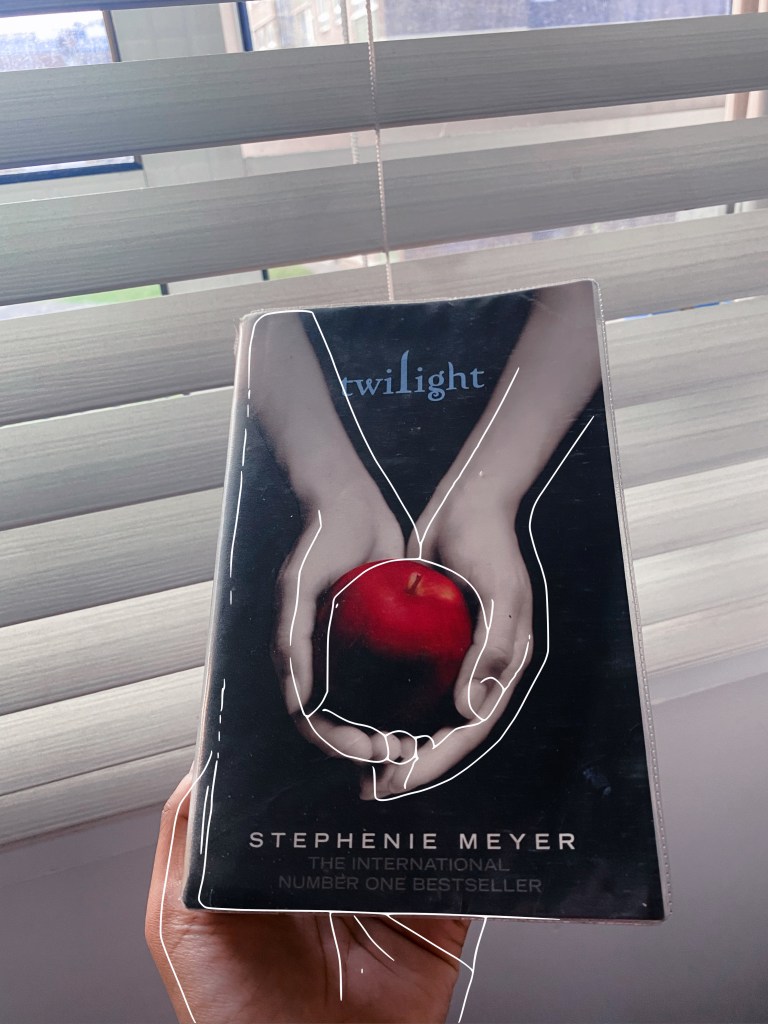
Why I Will Always Be A Fan Of Twilight

By Sajida Aktar

I remember binge reading all four books within a month and a half. I couldn’t wait to jump from one ending to the beginning of another. To treat myself, I’d watch the movie right after finishing a book to further expand my growing obsession. I couldn’t tell you what my 12-year-old self loved so much about it. I re-read the first book again 10 years later and it took me longer than a month to finish because by then I had developed in all aspects of my life. I pondered, what the hell is this shit? Why did I love it so much? These characters are awful!

The books introduced me to a world of Young Adult Fiction. The selection at the time was modestly small. Publishers were still deciding where this new genre belonged because it was nowhere near Child Fiction nor was it desirable enough for Adult Fiction. Twilight had high school romance, vampire sex, hot werewolves, and a love triangle. It had teenage angst, a feeling of comradeship among mythical creatures and a forbidden love that was in all ways unrealistic but exciting to read about.

I still go back and watch the movies religiously every year. It has become a sort of comfort for me, though I am well aware that the films are in no way Oscar worthy. They bring me back to a place of happiness in a world that didn’t exist but was in all ways a home in my imagination from the realities of boring mundane life. I watch the films because I feel like I am a 12-year-old girl again, waiting for break time to come around so I can find the other girls who read the book. We’d discuss for weeks the new movie that was coming out and our expectations leading up to it. Tearing each other apart based on the teams we chose (I was unconditionally and irrevocably in love with #TeamEdward). We knew nothing of boys or men because they were nothing compared to the fictional ones we read about. Those who could afford a copy of the book or DVD would be kind enough to share it around so the others could join in. There was no gatekeeping, we were in all ways unapologetically outspoken about sharing this world with anyone who was interested. Our standards, our education, our look into the world of an almost-grown-up was through this book.

The movies have created a safe place to my younger self and I will forever be tied to the franchise because of it. I come back to it after a bad day or a cold evening in Winter, where the best time is spent wrapped in a blanket and having a mug of hot chocolate as my company. I come back to it every year because it reminds me to nurture that little girl inside of me that I sometimes forget about every now and then.

Daisy

By Carina Carvalho-O’Dell

Opening the door forcefully, she checks in, scribbling her signature on papers before grabbing them and running. Sprinting down the discouraging hallways, passing patients with worse futures than hers. Each one held the same disheartening expression with a tiny amount of hope that they could escape from this hellhole.

Daisy pushes herself further down the building even though her legs plead for rest. The bright blue walls tried to scare peoples fear away but were peeling down as if it was sobbing to break out. 

Stopping right outside the door, her trembling hand latched onto the handle. The icy metal sank into her warm skin. Taking a deep breath letting all the chemicals and antibacterial block her nose as if reminding her where she was. Gathering the courage, Daisy snapped the handle and pushed her way in. Clover sat comfortably in bed with her body under the covers. Her eyes landed on Daisy, and Clover’s face lit up like an on switch. 

“Hey, big sis”, her cheery voice filled the lifeless room. 

“I’m only five seconds older,” Daisy rolled her eyes as she closed the door. The walls were painted in a nauseating yellow as if reflecting her sister’s state. Clover’s bed was leaned against one of the walls, a small table beside it and a long window behind.  An empty vase sat there with nothing but water and a few wittering petals from the last bouquet, counting down the seconds till her time was up.

“I’ll be leaving you soon” Clover’s voice switched from joyful to delicate as if she said the wrong word; Daisy would break like a bubble. Squeezing Clover’s hand with a dejected smile on her face, they had been together since they were in their mother’s womb.

“Everything’s gonna be fine; your big sister is here” Daisy held her sister close, not wanting to let Clover go. Daisy attempted to hold onto her emotions, but her grip was loosened, and the tears were clouding her eyes. 

“I don’t want to say goodbye”, she cried out, her life shattering around her. Her twin sister was dying, and there was nothing Daisy could do.

“This isn’t goodbye. This is simply, see you later.”

Interview with David Nath: The Art of Storytelling, Fact versus Fiction and Industry Advice by JOSETTE PUNTER-THOMAS

Zoom has proven to be an effective way to connect and collaborate with others as the last couple of years have shown. Luckily for us, it gave us a chance to have a technological ‘sit down’ with British producer and director – David Nath. Greeting turned off cameras and muted microphones, the seasoned professional that he is, he still exuded the same charisma that he would have if talking directly to us in person.

There are many routes a person could take to get their start in media. David, despite getting a degree in Politics ventured into journalism by working on an evening newspaper. Not to say print is dead but it is much more of a rarity to see a physical copy of a newspaper these days, especially when we have access to a plethora of papers from one tap on our screens.

For three to four years, he primarily reported on crime which can be perceived to have had an influence on the dramas he has gone on to produce and direct. London Weekend Television – a regional broadcast – is where he caught his break working in documentary, taking him from researcher to producer and then eventually directing freelance. David gave an example of what his time looked like during this period as he was working with ‘real people, real stories’. For two to three years, he followed a murder squad, starting with the discovery of the body to the prosecution of the perpetrator.

David notes the differences between his work then and now describing them as a very ‘different form of storytelling’ after his debut in drama in 2014/15. Transitioning from documentary to drama is not without it challenges. He was apprehensive at first about stepping into the ‘mythical’ world of drama after dealing with the cold hard factual reality of documentary.

With documentary it is observational and there is little control over the narrative as the telling of events cannot be predicted since you’re dealing with real people who divulge the information and therefore real emotions. Which is a very different story compared to drama wherein you start with a ‘tabula rasa,’ a blank slate, over which you have complete control over the direction of the narrative. However, such control comes with great responsibility to ‘get it right’ Nath warns as human curiosity has to be satisfied. That’s what drives the narrative engine, people wanting to see themselves reflected in the storylines and characterisations on television.

Garnering experience in every role imaginable, David shared some insights on the industry and creative processes he undertakes. Much like writer’s block, moments of crisis are bound to happen ­­­– whilst it is important to follow your instincts, feedback is conducive to the formulation of an idea, especially in a collaborative setting. It is important to not be defensive and find a way where all parties can be agreeable. The first step on the way to collaboration? Share your work. It is normal to feel scared about putting your work out there, but it remains a fact that personal work will be judged by other people, that it’s simply the nature of this industry. It is an anomaly to perfect something the first go at it, that is where feedback comes in handy. Continuing to offer practical advice for budding scriptwriters that I’m sure applies to novelists – you too have to write in order to be a writer. Procrastination is the enemy of progress, but we all fall victim to it from time to time.

Although ‘writers’ rooms’ are more of a popular notion in the US, they are beginning to be introduced into the UK where a head writer will have hand-picked others to collaborate or solely write episodes of a series. In order to get into that room, you have to get your work out there. He was honest and mentioned that the informality of this industry did mean luck plays a part in every person’s success story, but you have to take chances, even if that looks like DM-ing a respective writer asking to share your work with them. What’s the worst that can happen? You get told no. Then you go again, on to the next.

The interview was concluded after graciously fielding our questions and extending an olive branch as much as to view our work if we would ever want to share. Though he spoke from the mind frame of a director/producer, his illuminating advice was definitely applicable to this wannabe writer and hopefully someone out there too.

My Last Goodbye To You

Maryam Khan

Everything was an adventure with you,

From your spontaneous outings that always ended in laughs and fond memories,

To the random lie-ins we’d have when you were having a low day.  

But that all went away when you did.

There were no more random walks in the park,

No more jumping on trains and seeing where they took us,

No more looking at strangers and thinking up stories about their lives.

All that was taken away when you were.

So now as I sit here by your grave,

I think about all we did together and remember how you used to say,

“In the end, we only regret the chances we didn’t take”.

So as my last goodbye to you, I promise to take all the chances I’m given.

ABBA Voyage: A Review

Review by Bex Thackery

You can now go to space. Or back in time to 1977. You can stand metres away from the versions of people and a true phenomenon that existed 45 years ago. 

Although it’s 2022 and it feels as though almost anything is readily available at our fingertips, all of these things sound too beyond the time of today. ABBA Voyage, the innovative virtual concert that began in May 2022, in London at the ABBA Arena has been described by those who have not attended as being pointless and a waste of money when you’re not “seeing the real deal.” I feel confident when I say I believe that anyone who has attended would reply “it’s indescribable, a form of true magic.” 

The concert journeys through the Swedish supergroup’s popular hits, namely Knowing Me, Knowing You, Mamma Mia, only two of their new songs, with the curtains closing to The Winner Takes It All as the audience comes together in emotion and unison. Between the nostalgia of their greatest songs, the avatars of the band go through numerous costume changes that have been designed by the likes of Michael Schmidt (who once dressed Debby Harry in razor blades), Dolce Gabbana and more, headed up by Swedish costume designer Bea Akerland.

They also dance, they embrace one another, and they talk to the audience in London. They appear as if they are on stage, films are shown that nod to the music videos from their heyday, and strangely, ABBA-turn-anime clips are displayed to the audience. But, who am I – or who is anyone – to fault ABBA?

As my friend and I propped ourselves up at the bar with only moments to spare before the show began, unlike any other gig, we were surrounded by children from the ages of three, teenagers, and people who would have been in their forties when the group won the Eurovision song contest with Waterloo in 1974. Wearing a subtle tribute to the band – a 70s-esque brown corduroy waistcoat and black denim flares – I glanced around the room of anticipating guests. Middle-aged men in gold and silver bomber jackets, novelty glasses that read “ABBA” across the brow of younger ones, and groups of women in metallic kickflares and the renowned “Agnetha hats” in blue sequins.

Waiting to be served, my friend and I practised the routine to Dancing Queen whilst singing/excitedly giggling to the tune. A woman behind me, I’d say in her 60s, tapped me on the shoulder and said “I’d pay to see you perform” and we laughed together when she said in disbelief that I wouldn’t have been born during the time of the band’s fame.

All of this is when I realised that there really aren’t many moments like this in life. Where a group of people, strangers, of all walks of life, generations and interests can be united by something that is personable to all, even when say half of them weren’t even alive when the idea was born. And that statement is testament to the entirety of the concert and experience – ABBA have not only proved that they are timeless – and now immortal – but that their significant influence on European pop music is something that will be written in history. All of it was and still continues to be a true metaphor for what music in general is to most of us – something that isn’t physically there, that isn’t tangible, and yet we feel personally and uniquely connected to in so many indescribable ways. And maybe our surface-level thoughts, our opinions of the band, who is our favourite or which song is the best is not something we can all agree on, but the feelings of euphoria and nostalgia is something that can be shared through many, for a long period of time. Maybe, forever. 

Picture credit for second photo to Huzzar Huzzar Vintage

Review on Emily

By Abbigail Mulleavey

The newly released movie Emily directed by Frances O’Conner hit theatre’s on October 14th and has received a wide range of reviews since the premiere. Going into the movie, my expectations were to learn about her relationships with her family, see how Emily began to write, the inspirations behind Wuthering Heights. It is clear from the first scene that Emily is an outsider within her own family based on the darker shades she is dressed in compared to her sisters. Often, we see her in shades of blue and grey while Charlotte and Anne are in light pink and white. Despite Anne being the youngest, Emily is labelled as the least mature of the family due to lack of goals and crippling shyness that limits her in friendships.

She relies on her siblings for companionship which leads her to grow a close bond with her brother. The building of the relationship between Emily and Branwell was enticing and heart-warming, despite Branwell inadvertently getting Emily into trouble. Branwell leads Emily to explore opium, drink, and trespass on a neighbor’s property; however, he also encourages her to write poems, find confidence in her unique personality, and look for relationships outside of her family. Their complex relationship brought both dramatic and humorous scenes to the film and encouraged the character growth of Emily.

Without spoiling the plot, Emily struggles to deal with her tender emotions that continue to arise throughout the movie, and the death of a close friend encourages her to put pen to paper and start Wuthering Heights. Overall, I did enjoy watching the dramatic take on Emily’s life over a documentary but do feel that Frances O’Conner could have expanded on a few areas. I would have liked to see the three Brontë sisters work on their collective book, Poems by Currer, Ellis, and Acton Bell, and wished the haunting mood carried on through more scenes. With all this said, I give Emily 3.5/5 stars and would recommend it to those who enjoy exploring the life behind famous authors, like Emily Brontë herself.

Trailer for Emily here:

The Dangerous Allure of Disaster Fiction by Addison Williams

As I write this, the wind is beating the windows of my bedroom, warnings of storm Eunice are popping up on my phone, and I’ve realised that earlier today, I watched a video about how the moon could cause the end of the world in 2030. It’s too late for coffee. I haven’t finished reading the novel I need to for university, and I need to edit a slam poem, book a train ticket, and cash a cheque. I have no time for the end of the world. Or, at least, I have no time for the most likely end of the world, which will happen at some point in the future. That’s future Me’s problem. But what is it that draws people to disaster fiction?

If I’ve learnt anything from movies like The Day After Tomorrow and 2012, it’s that disaster happens in the blink of an eye. In most modern disaster films, it’s not a small group of survivors escaping a capsized Poseidon, it’s a moon crashing, earth-burning, blood-curdling end-of-all-time catastrophe. And if you aren’t an A-list star with a family or have some unresolved issues with an ex-spouse, child, or parental figure, then, good luck.

But most disaster movies are nothing more than ephemeral thrill rides. I can distance myself from them, tell myself it’s fiction, and won’t happen that way. Covid-19 was not the Andromeda Strain and 2012 didn’t signify the end of the world. But maybe that’s why we enjoy them?

From the safety of a bedroom, we witness fictitious heroes emerge victorious in the face of annihilation. While outside the world rages on with tedious signs of its potential end. And I can’t help but ask, where’s the glory? Who wants to be one of the billions of heroes who recycle, cut their emissions, and eat less meat? The irony is that these acts could be counted as heroisms against the end of the world and can be done from the safety of a bedroom. But isn’t it easier to pretend there will be one day marked for disaster, where everyone gets a chance to test their disaster fiction knowledge and emerge victoriously? Rather than acknowledge the worlds death will creep in slowly, not with a bang, but with a whimper. Realise that it’s mundane acts like fitting recycling in between my essay writing and paying bills that will make the difference.

The problem is future Me won’t be given a chance to pull their head up from a book or look away from a screen. To feel comforted that the world is still intact. Future Me will ask why past Me was such a little …….. . He won’t be happy, to say the least. Because he will realise there was no defining moment, just a sea rising slowly, wet and ruined books, and cinemas being used as shelters against the end of the world.

Image by Addison Williams.

‘Writing and Space’ by Fleur Bruneau

When I am sitting down to write in creative ways, I find the space I am in to be as important as the subject in which I am writing. 

For example, writing in libraries has never really worked for me, as I feel some Godly judgement cast upon me by others in the library, despite the fact that they aren’t even aware of my existence, let alone care.

However, this external pressure means I can focus on nothing else but focussing, and thus end up not writing anything at all. 

I have tried writing in The Hideaway within uni thinking maybe this would be a helpful place to be. It is not silent, which means that I don’t think I’m going to be thwarted for existence, and has a good amount of coffee that is nearby – which seems to be a crucial point when I work. 

The major downside to The Hideaway, it seems, is the sheer amount of things going on. The bright house lights, the bright colourful lights, the screen that displays the music video of the music being played that is slightly too loud, the consequential shouting as a result of the too loud music.

I often find myself gazing into the blue lights that hang in columns from the ceiling like one would gaze at fish in a tank. Not a single thought passing through my head

For me, I must be in a place that has movement and noise, but not so much that it becomes distracting. There must be some form of overpriced coffee (which I use to bribe my monkey brain into work) and some form of light music being played in the background. I have to be sat next to a window or the lights must be ambient. This particularity means that it consequently means I do very little work. 

I jest.

Starbucks, I have found, seems to be the place that fulfils all these factors. The baristas leave you alone, no one will speak to you, there are outlets that allow you to charge your phone when you inevitably forget to charge your laptop the night before. The wifi is reliable, but not so good that you can procrastinate by watching a YouTube video. 

I have since discovered that doing work in Starbucks allows for me to build the facade that my life is in fact together. This air of assumed confidence means that I can convince myself that I am Okay at writing, that the last 2,000 words I wrote aren’t utter utter shite and that this is my world that others happen to be living in.

For someone with anxiety, this facade of arrogance means I complete work outside the four walls of my flat without having a panic attack beforehand. The coffee, the music and the overall vibes are perfectly conducive for my work.

Space, it appears, is as important as your writing.

‘Facebook arguments, re-connection and the apparent death of the Irish language’ by Bartholomew Brockbank

In my spare time I frequent some of the linguistic and language learning pages on the ever-frothing fountain of knowledge that is Facebook, and this is precisely what I was doing the other day when a certain comment stopped me in my tracks. It was a comment made by a person I happen to know from some of my language groups, who was bemoaning the amount of Gaeltachtaí in Dublin, where he lives, as a way of explaining the uselessness of learning the language.

For those who don’t know a Gaeltacht is a place where Irish is spoken, normally as a first language. There has been some success with artificial Gaeltachtaí (mostly in Leinster, as this is the region without a natural Gaeltacht as opposed to Munster, Ulster and Connaught which still have Gaeltachtaí). This is also where the Popup Gaeltacht gets its name.

The comment irked me, and naturally, being the agent of internet justice that procrastination occasionally deludes me into thinking I am, I responded. Despite the years of Irish grammar hardship burning in my mind, I gave a detailed and clear analysis of how I gained the level of Irish I have done – for the curious among us, my comment went something like this;

‘I started with Rosetta Stone complemented with Duolingo – once I had a better level of the basics and the grammatical functions, I moved onto evening classes so I could practise speaking, listening and all those things that you need to have modelled by a native or high level speaker in order to achieve a good level of proficiency’

This, however, was not what my fellow internet inhabitant wanted – instead of reacting negatively I had, against my deepest desires, given a clear and informative answer. His reply was quick, brutal and effective (at irritating me further).

‘What’s the point though? It’s not like you need Irish to get by here. I would pay for evening classes in French but I think ones in Irish should be free. It’s almost a dead language anyway.’

Such comments intrinsically misunderstand the reasons we learn languages and, while clearly designed with hyperbolic intents, deserve some picking apart. Why should it be that function overrides all other reasoning? This statement makes the assumption that the end goal of learning any language should be so that we can communicate with someone we otherwise couldn’t have – but does this not also apply to Irish?

Living in London, it isn’t often I get the opportunity to speak Irish anymore but it was only last week that in a small pub near my flat I heard a Dublin bhlás and turned around to their party ‘conas atá sibh a leaideanna?’ Instantly I was hit with roars of excitement. ‘Tá Gaeilge aige! Maith an fear!’ I stood at the bar with someone chatting happily I nGaeilge for a good while; ‘Feir plé ort ansin le do Gaeilge a fhoglaim! Sin dochcréidte!’ It was a moment of joy and connection – a pleasure for me to speak Irish again and a happy surprise for the party to meet someone speaking to them in their language in a foreign land.

And isn’t that what language is about? Connecting with people, whether through poetry or stories, whether via an everyday chat or an academic paper, whether living or dead – because that is the miraculous power of language, to traverse even the boundaries of life and death. Within language we see the fossilised thoughts of those who came before us, and through them, we can connect with those at rest as readily as if they were still here.

Language is a blessing – because we are all different, but with language we can begin to understand in what ways we are different, and how those differences shape our realities. Without learning Irish I never would have thought of ‘wearing’ your emotions upon you – which, if you think about it, makes a lot more sense – because we are not our hunger, our anger, our sadness, these emotions are just jackets that we wear for a period of time before moving on, they are transient. Níl mé feargach, ach tá fearg orm – I am not angry, the anger is upon me

Without learning Irish I wouldn’t have enjoyed a quiet moment of peculiar pleasure at the thought of a Ladybird or Ladybug being a Bóín Dé – God’s little cow.

So forget your boulangerie orders, your coiffure is fine – because yes, Irish people can already speak English and you could already speak to them – but could you really connect with them?

And why not study a language that you love instead of one you find useful? We all start as amateurs, but as the Italian origin of that word shows (from amare – to love); there is beauty in doing something for love over practicality.

Because Irish is not dead, she’s not even asleep, she’s just resting her eyes – and it’s about time we started giving her a reason to get back on her feet. 

This article has been adapted from a piece originally written for Letslearnirish.com