Helen Gordon

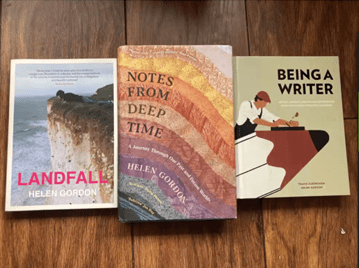
The last Speaker Session of the year was with Helen Gordon.
Friday 5th April 2024, 10-11:30.
This review is published on the Westminster Writes blog, under ‘name’*.

Helen Gordon is a novelist, nature writer, editor, and journalist sharing her career journey. She discussed strategies for breaking into the writing industry by demystifying different publishing and career routes, encouraging us to consider broader options. She also emphasised the value of networking and to never stop reaching out to professionals and agents until we get our foot in the door.
Monica Germana, co-leading the session, highlighted the value of opportunities offered within the university, such as industry events and workshops like the Hackathon, and our career services.
Researching the mechanics (and contacts) of the industry and possible roles and publication routes is crucial for success. It is undoubtedly best to start as soon as possible while we have more time and access to all of these resources while we are students at the university.

Helen Gordon teaches Creative Writing and is also a freelance Journalist and Editor. She said it is the case for many writers to have so many roles. From all the staff, students, and industry professionals I have come across, I know this to be true. She studied English Literature and Language as an undergraduate, has always loved reading, and hoped she could continue writing, and one day be an author, which are aspects I can relate to.

Helen provided advice that anybody can apply to progress in their careers, regardless of one’s finances or connections. Work experience is useful for making connections and developing an inner understanding of the industry, but is not always achievable and we must aim to make these connections elsewhere whenever we can.

She suggests by networking at events such as those hosted within university spaces, and reaching out to industry professionals for advice and work experience, we can get our foot in the door. Send cold emails or social media messages that are succinct and written in a friendly and professional manner. It’s necessary to be driven to make your own work experience opportunities happen. Follow up with attendees and ask for informational coffee meetings.

Helen acknowledges the importance of growing our understanding of the various roles within publishing, including rights management, to increase our job prospects, as well as the various ways to go about publishing ourselves, including specifics on non-fiction. Consider alternative routes to publication like small presses, crowdfunding platforms, and self-publishing. Research all roles within publishing like editing, sales, marketing and rights management as potential careers.
She warned off vanity publishing which has come up in Reflective Writing lectures before, always (understandably) disapprovingly!

A final pointer to take action on: Attend next year’s Hackathon that should hopefully be running again, to learn but also to network, and utilise our careers service.
Speaker Event – Aaron Kent

By Daniya Rana

Alright, let me paint you a picture of Aaron Kent’s speaker event—it was a whirlwind of words, wisdom, and a whole lot of heart. From the moment Aaron took the zoom, you could feel the energy in the call shift. There was this buzz of anticipation mixed with curiosity, like we were all about to embark on this epic journey together.

Now, I’ll be honest, I wasn’t sure what to expect from a poetry event. I mean, poetry isn’t exactly everyone’s cup of tea, right? But let me tell you, Aaron blew me away with his passion and charisma. He didn’t just talk about poetry; he lived and breathed it. It was like watching a master storyteller weave his magic right before our eyes.

What really struck me was how Aaron made poetry feel accessible to everyone. He didn’t get all high and mighty about fancy words or obscure references. Instead, he broke it down into simple, relatable terms that anyone could understand. It was poetry for the people, and it was beautiful. Aaron is also from a very similar working class background to me and that made me feel empowered! But it wasn’t just Aaron’s way with words that impressed me—it was his genuine warmth and authenticity. Especially when he talked about his experience having a stroke. It makes me wonder if we as readers can expect to see a creative expression of those moments in the form of an unconscious reflection. He shared these intimate stories from his own life that had us laughing, crying, and nodding along in agreement. It was like he was inviting us into his world, flaws and all, and saying, “Hey, we’re all in this together.”

By the time the event was over, I felt like I’d been on this incredible journey of self-discovery. Aaron had challenged my perceptions, inspired me to think differently, and reminded me of the power of words to heal, uplift, and connect us all. It was more than just a speaker event; it was a transformative experience that left a lasting impression on everyone lucky enough to be there.

So, if you ever get the chance to catch Aaron Kent in action, do yourself a favour and go. Trust me, you won’t regret it.

I remember Everything: a poem

I’m looking through old memories of us like a lost child in an antiquity shop; some are rusty and some still shiny, and I know I could never afford their little price tag up in the air. A lunch table covered in dust: the ghosts of clinking glasses and laughter and dirty plates still linger on its surface. Old paintings that we’ll never buy, frames that will never hang from our walls in the houses we looked up but never got around to purchase. Perhaps we were doomed from the start, like the dolls with haunted looks that sit lonely on shelves, abandoned from their owners once they had grown too old to care. Our memories begin turning yellow like the photographs sold in boxes, forgotten weddings and grand-grandmothers and soldiers who never made it back. One day your face will turn into a pale ghost like all these people have, lines on a piece of paper that was the center of shrines and prayers before it was thrown in an old box on the back of some truck. I dread that moment as much as I look forward to it. What about the days where I won’t fear hearing your voice every corner I turn, when the clothes I wore the day I met you will become just sweaters and trousers that stay on my floor for days. I remember everything now, and the memories are like a dagger deep into my chest that makes me bleed hopelessly on the white linens of my bed. But what about when I stop remembering. When the words you said become just words and the songs that I listened to during my time with you play on shuffle while I’m in the shower and it doesn’t even cross my mind how I timidly sent them to you saying: reminded me of you. And I walk through the antiquity shop in my mind, with no money left to spend: I am only here to have a look around. I won’t buy anything. So I gently touch some items dusting them off, their cold surface like a blade on my skin. It is such a curse, to remember. I wish we could forget how we almost had it all. One day, frames will become just frames and tables will be just tables again and ashtrays will remind me of the way my grandmother smoked in front of the fireplace and filled the room with smoke every Christmas. But now, it takes me back to the way you used to laugh at my when I put out cigarettes on a half-burnt candle in my old flat, blowing the smoke out the window and letting the ashes fall on the pillows; you hated the way my bedroom always smelled of smoke, but you promised you would never leave. But you did, and I remember. I remember everything. And I dread the day I won’t. 

Francesca Chiari

making literature accessible: a review of aaron kent’s talk

Whenever I walk into a bookshop, I am mesmerized by the number of well-designed copies neatly laid out on big tables at the entrance. Attention-catching titles paired with aesthetically pleasing images and colorful spines that would light up anyone’s bookshelf at home. Signed copies with annoying stickers, limited editions of a novel that I already own few copies of (namely, Little Women by Louisa May Alcott – but who doesn’t need that masterpieces in different languages, colors and designs). But the titles advertised are often the same: a new edition of some F. Scott Fitzgerald novel displayed; some famous actor’s biography next to a book that recently went viral on TikTok for all the wrong reasons. And I wonder: is that all literature and the publishing industry has to offer right now? The titles are always the same, the plotlines that people seem to be interested in too similar. 

When listening to Aaron Kent’s story, a few points stuck with me. Kent is a writer and a publisher with a focus on endorsing more writers from the middle class and making literature overall more accessible to the public. He started his career as a publisher while teaching in college, where he began printing books from the printers that were “free for staff”. Soon enough, Kent decided to make his hobby a job. Realizing that it would have been impossible to continue printing books from the school, he ventured new territories. However, this is where the problem of small runs came up: small publishers struggle to print as many copies as big companies due to financial limitations. However, Kent found too many problems in limited runs: it would exclude people from other sides of the world from buying the book, people who due to physical disabilities would be prevented from enjoying that type of copy. Plus, a limited run would make the book quite expensive, which would once again prevent too many people from buying it. All these factors contribute, according to Kent, to making literature more and more elitist. It is only easy to obtain new copies of books for individuals who have got the financial stability to do so. Most times, hard covers of books are released much earlier than the paper copy and are much more expensive to buy. This means that, by the time the book is released in a cheaper and more accessible paper copy, the book will be somewhat “old news”. In other words, if you want to engage in the intellectual discourse around a new book and be able to discuss it when it’s hot and fresh on the shelves ì, you need to spend more money on an hardcopy. If not, you can wait until the book is not as interesting anymore. To combat this issue, Kent decide to publish both type of copies simultaneously: by doing so, it is up to the costumer to decide which type of copy they like better without feeling pressured to spend more because the only edition available is the expensive one. 

Kent’s talk was an interesting outlook on the problems of the modern publishing industry, and the author gave many interesting points of discussion that will surely cross my mind whenever I step into a bookshop next. 

aaron Kent- Speaker

A few weeks ago, during the Humanities Hackathon event, one of the company representatives said that the element that set apart humanities students, from all the others, was their passion.

Throughout this module, the speakers who come to talk to us often target topics such as writing and publishing opportunities, career journeys, challenges and struggles. We hear a lot about their professional peaks and troughs but what we don’t hear enough about is when and why they decided to start writing- what the emotional journey was like from the time they realised they like to write, to the time they decided to pursue it as a career.  Aaron Kent delivered an exceptionally honest and emotional lecture including subject matters such as his health, his not-so-luxurious childhood, his personal life and even his financial state as a writer. At the core of his speech, he made it clear that the key factor in his journey which made him persevere and dedicated was his passion for his work.

Aaron’s speech started with stories of his childhood, in which he referred to their low-income household as a deciding factor in his journey as a writer. Though his love for writing was there, the courage to pursue it was a much debated thought as he didn’t think it was a feasible path for him. Kent explained, something which I personally felt a deep connection to, that he felt subjects like creative writing were not suitable for people with such ordinary backgrounds. There were many times where I also felt like a more ‘secure’ career choice such as doctor or engineer would have been safe.

Kent also talked about his health issues and how even though they momentarily seemed like an obstacle, he quickly overcame it and decided to commit even more to his writing. One of the most painfully honest moments of his lecture was when he mentioned that there were times where certain financial sacrifices had to be made in order to continue on this path but there were no regrets on his part.

by Khusbu H.

Guest speaker event: Yen Ooi 

By Aya Barake

We had another wonderful guest speaker on Zoom. Her name is Yen Ooi. She lived in Tokyo for three years with her husband and she worked in finance and as a tour manager. She went on to take a step back from working at that time as she reflected on what it was she wanted to do with her life. That’s when she realised her love of books, so she went on to take an online writing course at Oxford as well as creating a website to share her short stories. She ended up moving back to London from Tokyo and she also mentioned how she had never done any form of English education. Then she decided to go on and do a master’s at none other than the University of Westminster. She did her master’s in English literature. She spoke about how the degree gave her an insight into literature and history and how things were written at a specific time.  

After Yen completed her master’s, she volunteered and got internships in the publishing industry. She worked with a literary consultancy to reform their web platform and organise conferences. From doing this she realised that she was not alone with her writing anxiety. Her first book was a collaboration with Transmedia. It was her first science fiction book. In this book, she created a world that spanned over 3000 years. Yen thought of a section of the book for a film and another for a short story. Yen pitched her Transmedia project to anyone who would listen at Comic Con. While that was going on she kept writing short stories. Yen won her first award for her poetry.  

Yen also did a Worldcon science fiction book signing event for her book Sun: Queens of Earth. Yen, while working on getting the book published could not help but notice the small team at the company who were publishing her book. She asked them if they needed anyone to work with them so she could get some experience in publishing. They took her on and gave Yen the role of managing director. While working with them they went on to publish six books. After a year, the company was liquidated then she met Orna Ross, who was the founder of Independent Authors. Then she started to learn about self-publishing. Yen mentioned that you have to know everything from the beginning to the end if you want to take the self-publishing root. She went back to the publishers who published Sun: Queens of Earth and asked them to send over the rights so that she could republish it.  

Yen created a mentoring package for branding and marketing to creatives, one of the collaborations was with Curve House where they would run short sessions and review other writers’ work and help push them in the right direction. She got accepted into Holloway University for a practice-based PhD in creative writing. She took a year off to spend time with her newborn baby. While taking time off from work, she stayed active on social media specifically Twitter. That is how she connected with a game writer who needed East Asian knowledge, then met face to face in London and became the director. She learned a lot about games and how much effort and work it takes to produce one.  

Where is she now?

She is writing a thesis for her PhD submission as well as currently working as a technical writer for a teaching AI model at Westminster. She is thinking of developing a narrative consultancy.  

These are a few tips she ended her talk with… 

  • Network to keep good company. 
  • Keep up to date with changes and developments. 
  • Don’t procrastinate with projects and finish them. 
  • Keep experimenting with your writing.  
  • Lastly, trust the process.  

I found this talk very interesting and so informative. I learned so much about writing from Yen. I will be taking a lot of what she said in her talk into my own writing journey. She is such a remarkable person with a lot of talent.   

A writer’s multifaceted

Katie Hale, the writer invited by the tutor of this course, shared her writing history with us, and the speech focussed on how to become a professional writer. Katie Hale, the speaker this time, provides valuable advice and guidance to students who are eager to succeed in the field of writing. Katie Hale’s experience and views cover multiple stages from college study to art management to freelance work, as well as various employment opportunities in the field of writing and creativity. Katie Hale shared her study experience in college, as well as her experience in art management and freelance work. Katie Hale emphasised the importance of extensive experience and practice in becoming a professional writer. By sharing her experience in college and art management, she conveyed to her classmates the knowledge and skills in different fields and how to lay the foundation for our future writing career.

Katie Hale provides practical suggestions, such as attending seminars and professional development opportunities, as well as understanding your needs and applying them accordingly. These suggestions help us turn theoretical knowledge into practical skills and make informed choices in career development.

Katie Hale also focussed on fair pay and professional ethics, reminding students to ensure that they are properly paid, and warning them to avoid the possible negative effects of free work.

Katie Hale encourages students to actively participate and continue to learn. She suggested that everyone should give priority to writing and register for the newsletter to keep in touch with the industry. You can also join the Authors Association for more resources and support. I think this speech gave me a clear new understanding of future planning.

After the course, I searched for Katie Hale’s personal profile on the web page and soon saw her personal blog, which was very simple and beautiful typesetting, which made me quickly get to know her.

Katie Hale is a versatile writer. She not only has excellent performance in the field of literary creation, but also actively participates in various art-related activities and roles. As a poet, novelist and lyricist, Katie Hale showed her ability to control different styles and creative talents. Her works involve a variety of forms and themes, thus presenting a rich and diverse literary style. And Katie Hale also serves as a host in many professions: blogger and chat program host, art administrator, seminar leader and project manager, art award consultant and female lead singer who occasionally serves as a guerilla poetry task. My dream is to write my life freely like her, and there are many different professions. Experience.

I also browsed the books on the blog, and I saw that Katie Hale’s works have crossed many fields, including novels and poetry pamphlets. Her novel My Name is Monster and two award-winning poetry pamphlets prove her superb skills and diverse creative ability in different styles.

The novel “The Edge of Solitude” begins with a dramatic scene: a lonely ship sails to the most remote place in Antarctica. This ship not only represents Sky, the symbol behind a project with huge wealth, but also an attempt by environmental activist Ivy Cunningham to restore his reputation. The story seems destined to have many dramatic conflicts and challenges. I was attracted by the cover, and the short content summary also excited me. I can’t wait to read this book!

SPEAKER EVENT REVIEW- YEN OOI

Who is Yen Ooi?  

A person smiling for a selfie

Description automatically generated

Yen Ooi from her website http://www.yenooi.com

Yen Ooi is a writer-researcher currently studying her PhD in the development of Chinese science-fiction by diaspora writers and writers from Chinese-speaking nations. She is a 2023 Hugo Awards finalist, and her work helps cultivate cultural engagement with East and Southeast Asian culture, identity and values. Yen is the author of Rén: The Ancient Chinese Art of Finding Peace and Fulfilment (non-fiction), Sun: Queens of Earth (novel) and A Suspicious Collection of Short Stories and Poetry (collection). She is also the narrative director and writer of Road to Guangdong, a narrative style driving game, as well as co-editor of Ab Terra, Brain Mill Press’s science fiction imprint.  

As someone who values the importance of visual storytelling on another level, I wanted to share my thoughts on Yen Ooi’s speaker event, and how her journey into the world of narrative game writing inspired me to conceive my own game ideas. 

Yen shared her journey from beginning to present, starting with how she worked her way into the public eye through online writing for Oxford university and creating her own website to start building her portfolio. She picked up an internship with ‘The Literary Consultancy’ to help give her a practical framework in the business of writing, as well as volunteering opportunities and entry level publishing work, focusing specifically on how ‘literature and stories come about in a specific time, space and culture.’ 

From there, she started collaborating with her friends to build stories and even worked on a mobile game, taking herself to WorldCon as a way to promote her narrative gameplay. An interesting thing she brought up that I carried with me in my conception of my videogame idea was that game writing very much involves creating a platform of good quality, relatable writing so that your audience stays interested with each wave of the story.  

Something I also thought was really interesting about Yen Ooi’s journey was that she stepped into publishing as both a writer and a managing publisher. Going into publishing out of an English literature and Creative writing degree is one of the many avenues that a student can take, and Yen tackling both put her in a good position for her future as both a writer and a publisher. Alongside the many internships and work experience placements she did, her inspiring journey obviously demonstrates what a writer can do when they put their mind to it and work unbelievably hard to achieve their goal.  

From Yen’s speaker event, I took the idea of game writing and the issue that arises for many game writers which is how exactly to write a Superman game. From there, I conceived a story that I thought would make the characters and gameplay work, centred around a narrative I devised myself and built from the ground up. Yen Ooi’s speaker event made me realise that writing for games was something I could go into after my degree, and that inspired me to try my hand at it and see if I could construct an idea worthy of real-life creation. Of course, it is clear that it takes a lot of work, grit, and determination, but Yen made it seem possible to harness and idea and create something beautiful from it.  

‘No Country For Old Men’

The Coen Brothers’ thriller ‘No Country For Old Men’ tells the story of a Texas hunter, Llewelyn Moss, who (after stealing two million dollars) finds himself chased by a crazy killer, Anton Chigurh, who has been sent to retrieve the money. Throughout the 2008 film, the Coen Brothers’ attempt to provoke uncertainty amongst their audience allowed ‘No Country For Old Men’ to be so absorbing. It is clear that the characters’ suffering is out of their control, however, the directors successfully ensured there is a struggle to view characters, such as Llewellyn or Carla Jean (Llewelyn Moss’ wife) or the Sheriff, as a clear-cut hero or villain.

Coming from the gritty West Texas, Llewelyn Moss emerged as a complex figure in the Coen Brothers’ ‘No Country For Old Men’. From the moment he stumbled upon a drug deal gone wrong and took the opportunity to steal two million dollars, Llewelyn embodied both the rugged, determined hunter and the sly man caught in a deadly chase. But this decision is quite notably what set his fate. It was not only his brazen act of theft that defined him but his choices afterwards that revealed the depths of his character. As Llewelyn Moss finds himself hunted relentlessly by the assassin, Anton Chigurh, the decision to persist through the mounting danger while determined to outwit those also looking for the money could be criticised as both good or bad. While he is attempting to secure a better life for him and his wife, the harsh reality of it is his desire was driven by greed and had he ended the fight, the story would have concluded without so many unnecessary deaths.

To finish at the end, it is safe to say the role Carla Jean played in the course of ‘No Country For Old Men’ was more passive than that of the men in the film. She did not take the money or encourage the theft, she was not on the run with her husband, she did not pick up a gun or harm anyone throughout the story yet, in my opinion, her final scene with Chigurh had the most impact for the film. Sitting in Carla Jean’s home, he made her call whether she would live or die, “Heads or tails?”, he asked her. But she refuses to answer his ultimatum. This option had been thrown out to another character in a previous scene of ‘No Country For Old Men’ so the audience is well aware that Carla Jean’s decision could alter her fate; however, unlike the men in this film, she does not meet him with this challenge. A decision like this makes Anton physically uncomfortable—despite proposing the flip of a coin for her life as out of his control and a service to her, she perceives him for who he truly is and that in itself takes the power in the conversation away from him.

Unpacking the Layers of John Fowles’ “The Collector”: A Review

John Fowles’ debut novel, “The Collector,” first published in 1963, remains a captivating and unsettling exploration of obsession, art, and the dynamics of power and imprisonment. Through the dual perspectives of its protagonist and antagonist, Fowles crafts a narrative that is as deeply psychological as it is thrilling, ensnaring readers in a complex moral web that challenges perceptions of freedom, ownership, and the nature of love. This review delves into the novel’s themes, characters, and its enduring impact, offering insights into why “The Collector” continues to resonate with readers decades after its release.

At the heart of “The Collector” is Frederick Clegg, a socially awkward and reclusive butterfly collector who becomes infatuated with Miranda Grey, a beautiful and intelligent art student. Clegg’s obsession takes a dark turn when he wins a significant amount of money in the pools and uses his newfound wealth to execute a chilling plan: to “collect” Miranda, imprisoning her in the cellar of a secluded country house. The novel is split into two parts, with the first part narrated by Clegg, providing a window into his delusions and justifications. The second part is presented through Miranda’s diary entries, offering a poignant and desperate account of her captivity, her perceptions of Clegg, and reflections on her life and art.

Fowles masterfully uses these dual narratives to create a multi-dimensional exploration of the characters’ psychologies. Clegg, who sees himself as a benign captor, rationalizes his actions through a warped sense of love and protection, viewing Miranda as a prized specimen to be preserved and admired. In contrast, Miranda’s entries reveal the depth of her despair, her intellectual and emotional strength, and her attempts to understand and manipulate her captor. This juxtaposition lays bare the terrifyingly thin line between love and obsession, freedom and control.

“The Collector” is also a commentary on class and art. Clegg’s background as a lower-class loner contrasts sharply with Miranda’s middle-class upbringing and her aspirations as an artist. Through their interactions, Fowles critiques the societal structures that define value and success, and how these perceptions influence personal relationships. Furthermore, the novel explores the idea of art as both a means of expression and a form of imprisonment, with Miranda’s artistic sensibilities becoming both her solace and her curse.

What makes “The Collector” particularly compelling is its refusal to offer easy answers or redemption. The novel’s conclusion is as ambiguous as it is unsettling, leaving readers to ponder the complexities of its characters and the moral quandaries they represent. Fowles’ prose is elegant and precise, crafting a narrative that is as beautiful as it is horrifying, a testament to the author’s skill in balancing narrative tension with deep philosophical inquiry.

In conclusion, “The Collector” is a seminal work that has lost none of its power to shock, disturb, and provoke thought. John Fowles’ debut novel is not merely a story of abduction and captivity but a richly layered examination of the human condition, exploring the darkness that can lurk beneath the surface of ordinary lives. It is a must-read for anyone interested in the complexities of character, the nature of obsession, and the capacity of literature to challenge and unsettle. As we continue to grapple with questions of autonomy, identity, and the ethics of art, “The Collector” remains a poignant and relevant work, deserving of its place in the canon of 20th-century literature.

By Kazi Ahmed