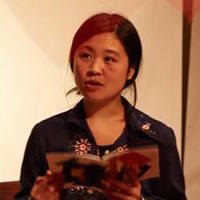
Writing the “I”: how to find a voice with Amita Murray

When writing fiction have you ever wondered about where you place yourself within your own writing? Amita Murray, winner of the SI Leeds Literary Prize in 2016 for her short story collection, Marmite and Mango Chutney, suggests the necessity of finding your voice to drive your stories in any pieces of creative writing.

Image result for amita murray the trouble with rose ebook

Murray knew she had to pursue fiction writing when she found her “unique voice.” She reiterates the idea of experimenting with your voice when it comes to writing fiction. “There are so many stylistic ways of writing and many voices to explore.” She suggests that whatever voice you choose to write with, it should never feel forced; your writing should just flow. And if you are finding it difficult to find one that “clicks”, just keep on writing until you do so;                                                               almost like trial and error.

Murray finds that humour comes naturally to her when writing. Having lived in and around London, Delhi and California, her works often explore the idea of cultural barriers and the stereotypes that come with it, doing so in a comedic tone. Amita Murray’s novel The Trouble with Rose beautifully explores the clash between western culture and South Asian culture. I personally believe that what drives her story is the honesty in her narrator’s voice. She explores the pressures of an Asian woman trying to please her traditional family whilst simultaneously trying to follow her own dreams, and she does so in a light-hearted tone. When writing the “I” in our own writing, she advises us to think about any misconceptions that we might have faced, whether it’s about race, intellectuality or even gender. In doing so, she believes that blending in experiences in our writing will enable us to have an “original and unique” voice.

When writing the “I,” although it is a great idea to draw upon one’s experiences, Murray suggests that sometimes there should be a limit on how much we should focus on it. Often when writing the “I”, works might get a little too personal, distancing us from a great story. Rather than writing on characters directly based on people that we know or have met, Murray recommends building characters “based” off people around us. This will ultimately allow you to adopt a unique voice as your characters are going to have a realistic touch and an element of creativity.

What I take away most from this meeting is that “writing generates writing.” It’s all about persevering; figuring out what elements make your stories interesting. It’s about writing and writing and writing, until you know when you’ve found “the voice” that will tell your stories.

Amita Murray’s The Trouble with Rose now available: https://www.harpercollins.co.uk/9780008291242/the-trouble-with-rose/

Khadijah J. 

A Talk with Amita Murray: When class and culture clash.

This Friday, the Reflective Writing groups from both level 5 and 6 met with short-story writer, blogger, and lecturer Amita Murray. She has writx293.jpgten several short stories including ‘Marmite and Mango Chutney’, and has recently published a novel: ‘The Trouble with Rose’. She is known for writing wonderfully about complex family situations, and really aims to add some truth into her work.

As she opens up the discussion, she mentions that she is recovering from a slight cold. She proceeds to tell us that despite previously being a dance teacher at a university, over the last couple of years, she’s realised that she really wants focus on writing fiction. After spending some time in India, the US and the UK, she became curious about the way in which voices meet, and often misunderstand each other; her objective is to write from a unique voice.

‘Feeling othered’ is also a main theme across her work, and she asked each of us whether we feel isolated in London because of our physical appearance, or perhaps the way we carry ourselves in the city. She highlighted that London is an extremely diverse city which is an obvious advantage, but this can often make each of us feel overwhelmingly lonely at times. I think every student in the room could relate to this statement.

On request, Murray read out the opening extract from her novel involving two families at a wedding. I liked the way she captured a comical situation between a cliché Indian family and an English family, integrating a good balance of narrative description and dialogue which drew me in immediately. Race is one of the main themes in her writing, and she effectively uses multiples references which depict a typical situation between a an Indian family and an upper-class white family: the grumpy grandmas with hairy top lips, sat scowling in the corner (something we can all relate to). Murray explains that she tries not to base her characters on her real family as she knows they are likely to read it.

Towards the end of the discussion, a couple of students asked Murray how she structures her writing. She told us that for her, it is important that the protagonist has an objective, but also an underlying conflict/internal problem. The rest of the novel will follow his/her journey through this, hopefully leading to a conclusive ending; an answer to their distress. When it comes to re-drafting, and deciding what should and shouldn’t stay, she recommended that we look at a ‘raw draft’, and decide what is overstated, and perhaps causing us too much despair.

We were rapidly running out of time, but some of the students really wanted to know how she got hold of an agent, and how she managed to get published. She gave us a bit of guidance on writing a cover letter, and ensuring that we say only relevant things about the book, and why we want to work for this particular agency. It was a satisfying end to the talk, and left me feeling hopeful about entering the publishing world once I graduate.

The Trouble with Rose is now available as an eBook: https://www.fantasticfiction.com/m/amita-murray/trouble-with-rose.htm

Jasmine Ridgley 

What is Enough?

By Mia Choudhury

It was that early December morning,
When the sun rose from the clouds
That you told me I wasn’t enough
And that I could never make you happy
Even though you had told me different the night before,
Even though you said you loved me.

But I suppose that was foolish of me,
To believe we’d wake the next morning
And everything would be the same as it was before.
But here we are, smoky grey clouds
In the distant space between last nights ‘happy’
And today’s ‘not enough’

But what is enough?
Because like you said it sure isn’t me.
Even though every fibre of my being was trying to make YOU happy
Despite the fact was falling apart every morning
I still made sure the black clouds
Of my mind were gone before…

It doesn’t matter what happened before.
We’ve screamed at each other enough.
Screamed and screamed until clouds
Of thunder formed over the skies and scared me
Into thinking that maybe the next morning
Would be different and we could be happy

But alas, here we are, our cup of happy
Empty like it was before
And we’ve not a morning
Left to even think about what could have been enough
But for my sake, for my peace of mind, for me
Will you point at the clouds,

Like Adam in the creation reaching for God in the clouds
And tell me which one told you not to be happy
With your life when God gave you me.
Tell me what made you do it before
Our minds, bodies and souls have had enough
Because I spoke to no serpent and ate no fruit that morning.

You tell me nothing clouds your vision on this grey morning.
You tell me everything is as it was before.
That you were never happy. And I was never enough.


Post by Mia Choudhury,  15th February 2019

Society of Young Publishers

Publishing can be quite an intriguing world for students and young professionals who want to make it in the book industry. It seems hard to get a notion of what is like to be in publishing, and sometimes we wonder what is actually necessary to make it in this world. The Society of Young Publishers is a non profitable organisation that provides a first contact with this professional field and arranges, in many different ways, a scheme of contact between professionals, amateurs and students.

On October 18th I was lucky to attend one of their get togethers in Doric Arch, a charming pub right next to Euston station. This organisation is entirely run by volunteers and they contribute in many different aspects: marketing, memberships, communications, etc. They are responsible for a great network that has been built all across the UK which counts with the support of a wide variety of publishing houses and recognised professionals. In this case, the event was an informal chat with different volunteers about their experiences in publishing: internships, collaborations, different study options and their impressions on how to best introduce yourself to this career. There were many people from different backgrounds: undergraduates, postgraduates, writers, interns and many more.

The conversation that stuck with me the most was the one I had with one of the volunteers about her job as a freelance publisher. I was chatting with two other students and she approached us to tell us a little bit about her experience. She explained to us how it was quite difficult to get hired by a publishing house when you don’t have much experience, so she decided to become a freelancer and ‘teach herself’ about the profession. It was really inspiring to learn how she explored many different sectors in publishing to acquire all sorts of tools that can be appreciated by publishing houses. For instance, she talked to us about the importance of familiarising oneself with the new technologies, specifically with graphic design, since that implies a very strong competence for a young professional who wants to be considered for a position in a publishing house.

Attending this event was refreshing and very interesting. I had never heard about the Society of Young Publishers before, but now I am eager to become a member and subscribe to their newsletter and magazine, since they give genuine and useful advice to people with a strong passion for books and publishing in general. I would strongly recommend everyone to check out their website, where they post dates for events, information of different kinds and also job positions. It can be found here:  

https://thesyp.org.uk/

Post by Paula Moreno


Forthcoming Events around London

Research By Rosie Lewingdon Post by Busra Almis

Waterstones, Tottenham Court Road:

Adam Foulds and Elanor Dymott In Conversation with Sarah Moss.

An evening spent celebrating the brilliant new novels from Adam Foulds and Elanor Dymott, hosted by Sarah Moss.

Monday 4th February 18:30.

An Evening with Patricia Bright.

An evening with YouTube and Instagram star Patricia Bright, she chats about the inspiration behind her new book, Heart and Hustle.

Thursday 7th February 18:30 – 20:30.

Harry Potter Night 2019.

A Harry Potter Night with themed cocktails.

Friday 8th February 18:00 – 21:00.

An Evening with David Wallace-Wells.

Environmental journalist David Wallace-Wells talks about his new book, ‘The Uninhabitable Earth.

Tuesday 12th February 18:30 – 20:30.

February Boozy Book Club – Her Body and Other Parties.

An instalment of their Boozy Book Club as where they will discuss Carmen Maria Machado’s book, Her Body and Other Parties. 

Tuesday 19th February 18:30 – 20:30.

Diary of a Drag Queen – An Evening with Crystal Rasmussen.

A very special evening with drag queen Crystal Rasmussen.

Thursday 28th February 18:30 – 20:30.

An Evening With V. E. Schwab.

An evening to celebrate the release of two new books from internationally bestselling novelist V.E. Schwab.

Saturday 9th March 19:00 – 21:00.

Meet Frank Turner at Tottenham Court Road.

Meet folk-rock icon and Sunday Times bestselling author Frank Turner, and get a signed copy of his new memoir, Try This At Home: Adventures in Songwriting.

Friday 22nd March 17:00.

Seasonal Feasts from Fiction Supperclub Vol. 4: Spring – A Room With A View.

The last in their four-part, seasonal series of literary-inspired supper clubs: Seasonal Feasts From Fiction. Vol: 4 Spring brings sun-dappled Italy to the TCR basement with a Florentine feast inspired by E. M. Forster’s much-loved classic, A Room With A View.

Thursday 25th April 19:00.

The National Gallery, London:

Talk and draw Sessions.

Join an artist and lecturer to explore a painting in two different ways.

Multiple dates, 13:00 – 14:00.

Sketchbook tour.

Meet an artist at the Sainsbury Wing Guided Tour Meeting Point, collect a stool and set off into the galleries for 90 minutes of looking at paintings and working in your own sketchbook.

Multiple dates, 13:00 – 14:30.

Daily guided tour.

Experience a 60-minute taster tour of the collection.

Monday – Friday, 14:00 – 15:00.

The Tate Modern, London:

The C C Land Exhibition, Pierre Bonnard, The Colour of Memory.

This is the first major exhibition of Pierre Bonnard’s work in the UK since the much-loved show at Tate 20 years ago. It will allow new generations to discover Bonnard’s unconventional use of colour, while surprising those who think they already know him.

23 January – 6 May 2019, £18 entry. 

Magic Realism, Art In Weimar, Germany 1919 – 1933.

Tate Modern will explore German art from between the wars in a year-long, free exhibition, drawing upon the rich holdings of The George Economou Collection.

30 July 2018 – 14 July.

To The Stars

Poetry by Rosie Lewingdon & Posted by Busra Almis

She is New York,

I am Venice, 

and you,

you love to travel. 

————————————————————————————————————

To The Stars.

You asked me where I wanted to go,

I smiled, and told you,

to the stars, my love, 

to the stars.

I smiled, and told you,

let’s go everywhere, even

to the stars, my love, 

and dance across the sky.

Let’s go everywhere, even 

the furthest reaches of the galaxy, 

and dance across the sky

with stars burning around us.

The furthest reaches of the galaxy 

would be quite the adventure,

with stars burning around us 

in a swirl of luminescent light.

It would be quite the adventure

to explore everything out there

in a swirl of luminescent light,

and to see otherworldly things.

To explore everything out there

would liberate my hungry heart,

and to see otherworldly things 

would free my mind from reason.

Poetry and Photographs: What Lila Matsumoto has to tell

Post by Shonatya Gogana


Image result for lila matsumoto

At times I wonder how it is that people manage to create pieces of writing inspired by photography, but Lila Matsumoto seemed to make it sound completely possible, not forgetting enjoyable. The quick interactive exercise at the start of her talk was a wholesome way to ease herself into the process of engagement with her audience; a picture of a painting on screen was shown and we were asked to write down what we felt was happening in it, from our first initial thoughts. It was interesting to hear a number of different ideas of what people had thought of whilst looking at the painting in front of them, including a mixture of emotions and forest animals. I found myself struggling at first to conjure up an idea, but nevertheless was blown away at how the minds of others were instantly connected with the painting.

Matsumoto spoke of responding to paintings through poetry and how she had become intrigued by the idea of it, and soon began to read her own collection of poems that each had been paired with a photograph. It was fascinating, being able to see the photograph in front of us whilst she read her poems aloud; it made it easier to connect the dots and see the ‘bigger picture’. I think I speak for the whole of the audience when I say that I could relate to Matsumoto when she mentioned how she was once afraid of calling herself a poet because, as she said, she ‘didn’t write the serious stuff’; however it soon came to her realisation, after her discovery of radical poetry and her feel for writing, that she was in fact a poet. She pointed out the idea, clearly, that you do not have to write the serious typical sonnets and ballads to call yourself a real poet, and that you are a poet if you feel like one.

Other topics mentioned were her inspirations for some of her writing, talking of T.J Clark’s ‘the Sight of Death’ and Gertrude Stein’s ‘Tender Buttons’, both including abstract ideas of writing based on pictures. Clark’s diary-entry themed novel presents the idea of exploring thoughts and feelings through influence of paintings, and Matsumoto made it clear that she had genuine interest in the whole ‘poetry based on paintings and photographs’ idea, as shown through her own work ‘Allegories from my Kitchen’. She then read another piece alongside music in the background. You could tell that the whole process of the poem and the music alongside each other was thought out well, as the music had specific pauses and the lows and highs of volumes would be at specific times, all in sync with her reading aloud.

When asked about her views on ‘space’ in her writing by a member of the audience, once seeing the way her poems were set out on the page, Matsumoto had no trouble explaining that she thought the use of space on the page was a vital necessity in terms of not sticking to the idea that your writing has to be set from the left going right and can in fact be set out in any way that you decide. As well as that, some other ideas she expressed importance for were removing all of the automatic features on Microsoft Word/Pages etc, like font and font size. All that she had to say in terms of having to stick to traditional ways of writing forms was one of the most influential things for me as an up and coming writer, as I agree with what she had to say about having a sort of ‘randomness’ to your writing.

Overall, Matsumoto did a respectable job at speaking about/sharing her experience of being a poet and her specific ways of writing being moved by paintings and photographs. Engaging well with each of us in the audience, she inspired us with her ideas and beliefs of what poetry can in fact be like.


Short Story from Level 4

Post by Gemma Conway and Xiaoxia Chen

The new Level 4 group are now well and truly settled in to their studies, Creative Writing student Floransa Ratkoceri tells us. She describes what they have been working on this year and how she has been finding it:

“So far I’ve loved the creative writing modules, it’s good in terms of allowing students to explore writing styles that they may have never tried before. Each class and lecturer challenge us with writing exercises and some of the work produced is stuff all the students use including myself.

This year we’ve been focusing on writing the city stand which is writing that’s inspired by the beautiful city of London. This module has a few different lecturers who give us new ways of looking at types of writing. Most recently we were looking at experimental writing, which was inspired by Eley Williams book, Attrib.

We’ve also been looking at ways of writing strand which takes a look at the genres of writing. From poetry, lyrics, short stories and non-fiction novels and this has really helped as they both link. 

In our reflective writing, this is time we get feedback on our journals and we have guest speakers who come in and either do some reading, and we get to ask questions and get advice. As young writings just starting out these are key questions and ideal people to go to for advice.”

During their excursion to the gallery, Floransa found herself inspired by one painting in particular: Werner Schramm’s Portrait of a Lady in front of The Ponts des Arts, 1930. Anybody with a special interest in Paris, “the city of love”, will already know the history of The Ponts des Arts that straddles the River Seine, now more popularly known as ‘love lock’ bridge. For a decade now, lovers from all over the world come to declare their love by attaching a padlock to its rails and throwing the key into the river. Schramm’s painting exudes a mysterious romantic energy, which Floransa captures perfectly in this short piece inspired by the Portrait of a Lady in front of The Ponts des Arts:

Madame Céleste by Floransa Ratkoceri

Madam Céleste wasn’t your typical French girl. Although she looked average, she was not. Like many of the French, Céleste was pale, and her make up would make her look just the slightest bit paler, making her dark features standing out against her fair skin. Her hair black and long as this is the only way her mother would let her keep it. Her natural waves astonished anyone who asked. Her eyes dark, her eyebrows thick and natural, yet arched. Making her seem surprised most of the time. Then there were her red lips. Red lipstick was her signature. If she gave you a kiss, it would leave her mark. The love letters she exchanged with men, sealing them with her kiss, always leaving them to want more. Céleste came from a family of new money. Her father Etienne inherited his families wealth when his only living parent left all his money to them.

Yes, Céleste seemed ordinary but she was not. She craved and longed for love. A love that she knew would never find her but tried her best to find. Every winters night Céleste would look out of her window as the snow began to stick and would tell herself, my love will be waiting for me. Céleste would wait by Port des Arts. She would look through her wardrobe filled with new money belongings, her mothers wishes that every person in Paris would know that they were wealthy. Céleste would find her most expensive fur coat. All black with a brown inside. The collar of the coat acting like a scarf, the arms protected by the many layers of fur. The coat was long and warm enough to tackle the winters rough and brutal mood.

She went to her desk. Gloves, necklaces, rings all laid out in front of her. She picked up the white leather gloves with frills at the wrist. Blue lacing and buttons to add the sense of wealth. The new leather smell. She picked up a black cloche hat that had blue diamonds on the left side. Her mother had made sure to teach her the value of matching accessories. Applying her signature red lipstick she fetched her black and red clutch and walked to Port des Arts.

The water turning into ice, the lamps exposing the fog, Céleste looked at all the couples walking arm in arm and hoped tonight she would find her love. Every night at the same time she waited. She waited for hours knowing he may never come. That did not stop Céleste, despite the many failed nights without anyone by her side, she waited. Many men would pass and smile, they would admire her scent, her red lips catching their attention, but yet they never stopped for her. Clenching onto her fur protected wrists, she looked across the water. She hoped her love would be gazing out for her the way she gazed for him. Sadly Céleste did not see anyone across the bridge. She gazed across one last time, and noticed a man. A man she had not crossed paths with before. Could this be him? Is this the man Céleste has been dreaming of?

As he looked up and caught her gaze time stood still for her. The world suddenly stopped. Céleste felt it all over her body, like a struck of lightning jolting through her veins. He looked as though he was smiling, but she could not tell. Céleste looked down at herself, brushed off any snow that had left traces on her fur coat and just as she looked up, a figure began running toward the man. A woman, dressed similar to her, but with long, red hair. Like fire, in the cold to warm the soul. He looked away from Céleste and turned to this red haired beauty, and gave each other a warm embrace, followed by true loves kiss. Céleste couldn’t believe that her love, her lightning already had a flame, keeping him warm.

As the couple walked past Céleste the man gazed into her soul once again, with sad dark eyes. She wondered why he was this sad, could it be that the red haired beauty was not his true love? Could Céleste bring herself to say anything to this gentleman? As the couple drew further away from her, he turned back to look at Céleste one last time. The final goodbye. The love of her life, had passed her by and she knew she would never be the red haired beauty.

IMG_0590.jpeg

Gemma Conway Xiaoxia Chen, 16 November 2018

Find your voice with Independent Presses

Post by Marta Sobczak and Fahima Chowdhury

We would like to dedicate and share on this month pages of Write Westminster Blog the subject we have all been introduced to on the recent speaker event lead by Neil Griffiths – a writer and founder of the Republic of Consciousness prize for Small Press.

We all realise these days how much struggle a writer must go through to get published. Big houses must meet their needs of big names, and big money, therefore their interest in helping rising authors, or those with innovative, creative ideas deviating from the generally accepted standard, is rather very small.

But don’t be mistaken, for there is a hope and we all can benefit from the alternative solutions given by Independent press.

We would like to encourage all of you to reach out into the wonderful world of publishers, who will do their best to support and give you a platform to be heard. The Small Press rely on people like you via subscriptions and donations, therefore any contributions are highly appreciated.

Fitzcorraldo is an independent publisher specialising in contemporary fiction and long-form essays. It was founded in 2014 and its main focus is on ambitious, imaginative and innovative writing.

Galley Beggar commits to publishing daring, innovative fiction and narrative non-fiction.

Influx Press publishes books obsessed with places. Funded by a couple of old school friends from Kent in 2011.

Republic of Consciousness  promotes and celebrates small presses in the UK and Ireland, founded by Neil Griffiths.

Marta Sobczak Fahima Chowdhury,  16 November 2018

How To Get Published

Post by Maarya Abbasi

The world of publishing isn’t easy so Neil Griffiths explains; from being published by both mainstream house and small press, and being the founder of consciousness prize for small press, also not to mention he is an award winning novelist. Neil Griffiths has certainly experienced it all. The journey is tough; It may perhaps go as low as “feeling betrayal when realising your publisher only backs one book a month and this not being yours”; to “feeling a great gratitude as everyone involved works around the clock to give your book the best possible chance”.

Neil was very straight forward with his approach to the industry of publishing as he has given us an insight of all the essential guidelines of having his book published, and the struggles for selling the given amount of copies by a publisher. The importance of the book being published is one thing but there are also other aspects that lead up after it, such as the “tiny little profile from book one” and “a couple of not that great reviews” which I think is totally undermining having being your first book.

Other matters were addressed, where at one point Neil was stuck having no publisher, and no agent, so he started writing a book; spending 7 years, and finally he ended up with a high profile agent. Neil eventually went to see the first person who commissioned his book for penguin and he suggested Gally Begger Press; an independent publisher who Neil had no absolute clue about.

Nevertheless Neil strongly advised to always go with small presses for the first book you write, as you may be lucky enough to sell a few 100 copies. This already qualifies us into a writing career. Also a key factor in addition to this is to have another job whilst writing since Neil explains “you don’t really want that because, where is life in your life”. I totally understand this concept, in terms of being productive outside your writing career keeping you saner and having more to write about.

Maarya Abbasi,  16 November 2018