Unknown's avatar

About writewestminsterblog

… ideas and inspirations from the Creative Writing community at the University of Westminster.

To The Stars

Poetry by Rosie Lewingdon & Posted by Busra Almis

She is New York,

I am Venice, 

and you,

you love to travel. 

————————————————————————————————————

To The Stars.

You asked me where I wanted to go,

I smiled, and told you,

to the stars, my love, 

to the stars.

I smiled, and told you,

let’s go everywhere, even

to the stars, my love, 

and dance across the sky.

Let’s go everywhere, even 

the furthest reaches of the galaxy, 

and dance across the sky

with stars burning around us.

The furthest reaches of the galaxy 

would be quite the adventure,

with stars burning around us 

in a swirl of luminescent light.

It would be quite the adventure

to explore everything out there

in a swirl of luminescent light,

and to see otherworldly things.

To explore everything out there

would liberate my hungry heart,

and to see otherworldly things 

would free my mind from reason.

Poetry and Photographs: What Lila Matsumoto has to tell

Post by Shonatya Gogana


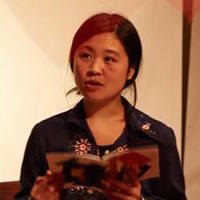
Image result for lila matsumoto

At times I wonder how it is that people manage to create pieces of writing inspired by photography, but Lila Matsumoto seemed to make it sound completely possible, not forgetting enjoyable. The quick interactive exercise at the start of her talk was a wholesome way to ease herself into the process of engagement with her audience; a picture of a painting on screen was shown and we were asked to write down what we felt was happening in it, from our first initial thoughts. It was interesting to hear a number of different ideas of what people had thought of whilst looking at the painting in front of them, including a mixture of emotions and forest animals. I found myself struggling at first to conjure up an idea, but nevertheless was blown away at how the minds of others were instantly connected with the painting.

Matsumoto spoke of responding to paintings through poetry and how she had become intrigued by the idea of it, and soon began to read her own collection of poems that each had been paired with a photograph. It was fascinating, being able to see the photograph in front of us whilst she read her poems aloud; it made it easier to connect the dots and see the ‘bigger picture’. I think I speak for the whole of the audience when I say that I could relate to Matsumoto when she mentioned how she was once afraid of calling herself a poet because, as she said, she ‘didn’t write the serious stuff’; however it soon came to her realisation, after her discovery of radical poetry and her feel for writing, that she was in fact a poet. She pointed out the idea, clearly, that you do not have to write the serious typical sonnets and ballads to call yourself a real poet, and that you are a poet if you feel like one.

Other topics mentioned were her inspirations for some of her writing, talking of T.J Clark’s ‘the Sight of Death’ and Gertrude Stein’s ‘Tender Buttons’, both including abstract ideas of writing based on pictures. Clark’s diary-entry themed novel presents the idea of exploring thoughts and feelings through influence of paintings, and Matsumoto made it clear that she had genuine interest in the whole ‘poetry based on paintings and photographs’ idea, as shown through her own work ‘Allegories from my Kitchen’. She then read another piece alongside music in the background. You could tell that the whole process of the poem and the music alongside each other was thought out well, as the music had specific pauses and the lows and highs of volumes would be at specific times, all in sync with her reading aloud.

When asked about her views on ‘space’ in her writing by a member of the audience, once seeing the way her poems were set out on the page, Matsumoto had no trouble explaining that she thought the use of space on the page was a vital necessity in terms of not sticking to the idea that your writing has to be set from the left going right and can in fact be set out in any way that you decide. As well as that, some other ideas she expressed importance for were removing all of the automatic features on Microsoft Word/Pages etc, like font and font size. All that she had to say in terms of having to stick to traditional ways of writing forms was one of the most influential things for me as an up and coming writer, as I agree with what she had to say about having a sort of ‘randomness’ to your writing.

Overall, Matsumoto did a respectable job at speaking about/sharing her experience of being a poet and her specific ways of writing being moved by paintings and photographs. Engaging well with each of us in the audience, she inspired us with her ideas and beliefs of what poetry can in fact be like.


Short Story from Level 4

Post by Gemma Conway and Xiaoxia Chen

The new Level 4 group are now well and truly settled in to their studies, Creative Writing student Floransa Ratkoceri tells us. She describes what they have been working on this year and how she has been finding it:

“So far I’ve loved the creative writing modules, it’s good in terms of allowing students to explore writing styles that they may have never tried before. Each class and lecturer challenge us with writing exercises and some of the work produced is stuff all the students use including myself.

This year we’ve been focusing on writing the city stand which is writing that’s inspired by the beautiful city of London. This module has a few different lecturers who give us new ways of looking at types of writing. Most recently we were looking at experimental writing, which was inspired by Eley Williams book, Attrib.

We’ve also been looking at ways of writing strand which takes a look at the genres of writing. From poetry, lyrics, short stories and non-fiction novels and this has really helped as they both link. 

In our reflective writing, this is time we get feedback on our journals and we have guest speakers who come in and either do some reading, and we get to ask questions and get advice. As young writings just starting out these are key questions and ideal people to go to for advice.”

During their excursion to the gallery, Floransa found herself inspired by one painting in particular: Werner Schramm’s Portrait of a Lady in front of The Ponts des Arts, 1930. Anybody with a special interest in Paris, “the city of love”, will already know the history of The Ponts des Arts that straddles the River Seine, now more popularly known as ‘love lock’ bridge. For a decade now, lovers from all over the world come to declare their love by attaching a padlock to its rails and throwing the key into the river. Schramm’s painting exudes a mysterious romantic energy, which Floransa captures perfectly in this short piece inspired by the Portrait of a Lady in front of The Ponts des Arts:

Madame Céleste by Floransa Ratkoceri

Madam Céleste wasn’t your typical French girl. Although she looked average, she was not. Like many of the French, Céleste was pale, and her make up would make her look just the slightest bit paler, making her dark features standing out against her fair skin. Her hair black and long as this is the only way her mother would let her keep it. Her natural waves astonished anyone who asked. Her eyes dark, her eyebrows thick and natural, yet arched. Making her seem surprised most of the time. Then there were her red lips. Red lipstick was her signature. If she gave you a kiss, it would leave her mark. The love letters she exchanged with men, sealing them with her kiss, always leaving them to want more. Céleste came from a family of new money. Her father Etienne inherited his families wealth when his only living parent left all his money to them.

Yes, Céleste seemed ordinary but she was not. She craved and longed for love. A love that she knew would never find her but tried her best to find. Every winters night Céleste would look out of her window as the snow began to stick and would tell herself, my love will be waiting for me. Céleste would wait by Port des Arts. She would look through her wardrobe filled with new money belongings, her mothers wishes that every person in Paris would know that they were wealthy. Céleste would find her most expensive fur coat. All black with a brown inside. The collar of the coat acting like a scarf, the arms protected by the many layers of fur. The coat was long and warm enough to tackle the winters rough and brutal mood.

She went to her desk. Gloves, necklaces, rings all laid out in front of her. She picked up the white leather gloves with frills at the wrist. Blue lacing and buttons to add the sense of wealth. The new leather smell. She picked up a black cloche hat that had blue diamonds on the left side. Her mother had made sure to teach her the value of matching accessories. Applying her signature red lipstick she fetched her black and red clutch and walked to Port des Arts.

The water turning into ice, the lamps exposing the fog, Céleste looked at all the couples walking arm in arm and hoped tonight she would find her love. Every night at the same time she waited. She waited for hours knowing he may never come. That did not stop Céleste, despite the many failed nights without anyone by her side, she waited. Many men would pass and smile, they would admire her scent, her red lips catching their attention, but yet they never stopped for her. Clenching onto her fur protected wrists, she looked across the water. She hoped her love would be gazing out for her the way she gazed for him. Sadly Céleste did not see anyone across the bridge. She gazed across one last time, and noticed a man. A man she had not crossed paths with before. Could this be him? Is this the man Céleste has been dreaming of?

As he looked up and caught her gaze time stood still for her. The world suddenly stopped. Céleste felt it all over her body, like a struck of lightning jolting through her veins. He looked as though he was smiling, but she could not tell. Céleste looked down at herself, brushed off any snow that had left traces on her fur coat and just as she looked up, a figure began running toward the man. A woman, dressed similar to her, but with long, red hair. Like fire, in the cold to warm the soul. He looked away from Céleste and turned to this red haired beauty, and gave each other a warm embrace, followed by true loves kiss. Céleste couldn’t believe that her love, her lightning already had a flame, keeping him warm.

As the couple walked past Céleste the man gazed into her soul once again, with sad dark eyes. She wondered why he was this sad, could it be that the red haired beauty was not his true love? Could Céleste bring herself to say anything to this gentleman? As the couple drew further away from her, he turned back to look at Céleste one last time. The final goodbye. The love of her life, had passed her by and she knew she would never be the red haired beauty.

IMG_0590.jpeg

Gemma Conway Xiaoxia Chen, 16 November 2018

Find your voice with Independent Presses

Post by Marta Sobczak and Fahima Chowdhury

We would like to dedicate and share on this month pages of Write Westminster Blog the subject we have all been introduced to on the recent speaker event lead by Neil Griffiths – a writer and founder of the Republic of Consciousness prize for Small Press.

We all realise these days how much struggle a writer must go through to get published. Big houses must meet their needs of big names, and big money, therefore their interest in helping rising authors, or those with innovative, creative ideas deviating from the generally accepted standard, is rather very small.

But don’t be mistaken, for there is a hope and we all can benefit from the alternative solutions given by Independent press.

We would like to encourage all of you to reach out into the wonderful world of publishers, who will do their best to support and give you a platform to be heard. The Small Press rely on people like you via subscriptions and donations, therefore any contributions are highly appreciated.

Fitzcorraldo is an independent publisher specialising in contemporary fiction and long-form essays. It was founded in 2014 and its main focus is on ambitious, imaginative and innovative writing.

Galley Beggar commits to publishing daring, innovative fiction and narrative non-fiction.

Influx Press publishes books obsessed with places. Funded by a couple of old school friends from Kent in 2011.

Republic of Consciousness  promotes and celebrates small presses in the UK and Ireland, founded by Neil Griffiths.

Marta Sobczak Fahima Chowdhury,  16 November 2018

How To Get Published

Post by Maarya Abbasi

The world of publishing isn’t easy so Neil Griffiths explains; from being published by both mainstream house and small press, and being the founder of consciousness prize for small press, also not to mention he is an award winning novelist. Neil Griffiths has certainly experienced it all. The journey is tough; It may perhaps go as low as “feeling betrayal when realising your publisher only backs one book a month and this not being yours”; to “feeling a great gratitude as everyone involved works around the clock to give your book the best possible chance”.

Neil was very straight forward with his approach to the industry of publishing as he has given us an insight of all the essential guidelines of having his book published, and the struggles for selling the given amount of copies by a publisher. The importance of the book being published is one thing but there are also other aspects that lead up after it, such as the “tiny little profile from book one” and “a couple of not that great reviews” which I think is totally undermining having being your first book.

Other matters were addressed, where at one point Neil was stuck having no publisher, and no agent, so he started writing a book; spending 7 years, and finally he ended up with a high profile agent. Neil eventually went to see the first person who commissioned his book for penguin and he suggested Gally Begger Press; an independent publisher who Neil had no absolute clue about.

Nevertheless Neil strongly advised to always go with small presses for the first book you write, as you may be lucky enough to sell a few 100 copies. This already qualifies us into a writing career. Also a key factor in addition to this is to have another job whilst writing since Neil explains “you don’t really want that because, where is life in your life”. I totally understand this concept, in terms of being productive outside your writing career keeping you saner and having more to write about.

Maarya Abbasi,  16 November 2018

‘Love affair with language’: A morning with Eley Williams

Post by Mia Choudhury

The anxiety of not being able to communicate with your audience, as a writer, is a scary thought but Eley Williams tackles this with the grace of a fairy and the bravery of a knight. Being the winner of the James Tait Black Memorial prize and the Republic of Consciousness prize would make you think she has it all figured out by even someone as extraordinary as Eley Williams needs to tell herself to ‘keep going.’ We discussed the role of how doubt and anxiety play into the hands of fiction writing and how we can overcome them.

Eley was very open to sharing her tips and struggles for writing short stories, telling us that creating deadlines for yourself can help improve your skill as a professional writer. She mentioned entering writing competitions, not with the intent to win, but rather to challenge herself with a deadline to meet.

Other topics like the importance of research were mentioned and whether that was an inspiration to her writing or rather a necessity that forwards the idea. It’s both. Personally, I struggle to incorporate research into my writing for fear of being incorrect and how time consuming it can be. However, Eley Williams has opened up a door that combines research being the inspiration behind a project and also a necessity. Her writing deeply reflects her extensive research behind language and creates a new dynamic in her writing that I haven’t seen anywhere else before.

Attrib. and other stories by Eley Williams


I was very struck by the visual power of her writing. Every word that poured out of her mouth flooded me with images and swept me away, making it very easy to connect with her writing. She read the short stories ‘The Alphabet’ and ‘Platform’ from her book Attrib. and other stories. ‘Platform’ had an immense amount of energy to it that was grounded by the action of the protagonist’s finger pushing against a man’s forehead (you’ll have to read it to find out). I’d recommend Attrib. and other stories to writers looking for a breath of fresh air and inspiration for their own writing.

Eley said, “A project in the mind is more daunting than anything else on paper.” I couldn’t agree with her more. If I am taking anything away from this talk, it is to ‘keep going’ and write every idea that you think of. Writing can be scary and daunting and you may feel useless at times but every great writer you have ever read has mostly likely felt that way too. Write that draft again and again and again until you are satisfied. Like Eley said, ‘keep going.’

Mia Choudhury,  19 October 2018

Meeting David Nath

Post by Cagla Kuru

Seeing David Nath for a second time was just as refreshing as the first. As an overwhelmed, panicked and stressed out second year, I can honestly say that listening to David speak about his experiences as a producer and director reminded me of why I was studying English with Creative Writing in the first place. It can be very easy to become unmotivated and often a little lost, sometimes even questioning your ability to write or follow your dreams. But there is something about the way the BAFTA-winning writer talked which was both reassuring and inspiring.

unspeakable

‘Unspeakable’ Channel 4

Perhaps that’s because he gave such useful advice, as well as brilliant insights into his experiences and the lessons he has learned along the way. One of my favourite parts of his talk was when he discussed the importance of making contacts and looking at companies to work with, while all the time working to put ourselves out there! Standing out is key and this goes for all areas of life. Another thing that really stuck with me was, “If you have a problem, don’t stop – keep on going”. Having inspiration in your life is important as it can influence your work ethic, and I know many writers can relate to the difficulties of being unmotivated some of the time. When I started University, I often felt bad about having ‘writers block’ and assumed that it was something made up in my head. Of course, it can be real for some and non-existent for others, but David dropped some tips for how to deal with it when it strikes. For example, taking some time away and appreciating other things a little more, as well as talking to other writers on how to deal with it.

It was definitely a good experience to have David Nath with us once again – he’s truly inspiring to up-and coming writers and directors who may want to take the independent route in life. He currently has his own independent documentary and drama production company, which goes by the name of ‘storyfilms.tv’. If you’re ever looking for someone to encourage those ideas for that ground-breaking documentary, or brilliant drama idea, that you have, I can promise that visiting his webpage will start you off…

Cagla Kuru,  18 December 2017

‘Sit down at a typewriter and bleed’: meeting crime writer Phil Viner

Post by Marta Sobczak

For a successful crime writer, Phil Viner turns out to be surprisingly amusing in person. His sense of humor made us burst into laughter more than once when he came to visit the University of Westminster in November, even though the subject of his talk included a recipe for describing the perfect crime. Not a typical Friday as we know it.

VinerOne of the greatest things about meeting a successful writer is that we get to learn about the publishing world and its rules first hand.  Phil talked us through the realities and responsibilities of being an author, the tough work, and tight deadlines. And since writing seems, to most of us, a long process,  full of ups and downs, I’ll admit that I was shocked to hear that some writers have contracts for two or even more books a year. When I spoke later with my colleagues, everyone (including me) seemed to be asking themselves the same question: Could I ever be that writer?

Phil’s story is material for a good novel in itself. Almost twenty years after he wrote his first unsuccessful novel, and following the financial crash which forced him to look for a new job, he took a risk and asked his wife if he could take two years to write a new book. Luckily for all of us, she said yes, and the incredible adventure began.

During our creative writing studies here at Westminster we debate what inspires us and what it take to be a writer. In Phil’s case, it was his two year-old daughter and the terrible vision of what would happen if she got hurt. He asked himself the question that we all do at some point in our life: what would we do for love? How far are we able to go, how dark can we become in the name of revenge for our loved ones, and lost ones? Phil created characters who are driven by these questions, and prepared to sacrifice their lives to find a killer. In doing so, he takes us into mysterious corners of human nature, where love can mend or break one’s heart and change a person forever.

Robert Frost once said ‘No tears in the writer, no tears in the reader’. You must be the first person to love your story, to feel attached to it to the point when you can’t stop thinking about it. When your characters are alive, and their fate is in your hands, you must be the first one who cares about them. The emotions we put into the stories we tell are the most powerful way of reaching others’ hearts and minds. This is the passion I saw when Phil Viner introduced us to the worlds he has created in his books. It was empowering, honest and fascinating.

By his example, we can also learn that finding the one perfect story that others will fall in love with can take a while. But we should never stop trying. Stories live within us. When there is one that moves you to your bones, all you have to do, as Ernest Hemingway once said, is to ‘sit down at a typewriter and bleed’.

Marta Sobczak,  5 December 2017

Banishing Lies and Writing with Heart

Post by Maddie Kalta

For the majority of people, Friday 13th is a dark and dreaded day. It happens often enough to cause mass panic in the hearts of our nation, but not quite often enough for anyone to realise that the threat is an empty one. On Friday 13th October 2017, however, I was lucky enough to be in a lecture hall to hear guest speaker, Amy Alward, tell us about her career as an author and editor.

potion diaries image 1

I’ll be honest with you. Over the last year, I have spent far too much time dwelling on those lies that we all experience. The little ones that seem to pop into your head at the most inconvenient time and niggle away at you – endlessly. I have experienced the “you’re not creative enough for a creative writing degree” lie. The “this writers block will never end” lie. And of course, the ever-present “this piece of work is awful, don’t read it out in class” lie.

I would go out on a limb and say that we all experience these types of lie at different points in our lives. The lies change as we change, but they always seem to have the same effect – overwhelming paranoia.

One of the things I found most inspiring about hearing Amy Alward’s story first-hand, was her ability to address many of the ‘lies’ that creative writing students experience. She talked about her late arrival to the reading-game and admitted that, that even though she wasn’t a natural reader at a young age, once she found the right genre she couldn’t help but be inspired to write her own novels.

(“I don’t read enough to be a writer” lie = sorted.)

Amy then talked us through her career in publishing – the extreme competition, her lack of experience, the way that she finally got an editing job, but still not in the right genre. The ups and downs of her story gradually began to affirm, but also quell, the fears we students face: the “after graduation” unknown.

Amy’s ability to overcome countless rejections and persevere with jobs that weren’t quite what she had dreamed of, eventually led her to an excellent opportunity – to “marry her writing career with her publishing career”.

Walking away from Amy’s talk left me with something different niggling at my brain, not a lie, but a simple sentence: “I always start writing from the characters and the build the world around them, it creates heart.”

There are lots of things we don’t know. We don’t know what will happen after we graduate, we don’t know how long it will take to get that dream job. We don’t know which lie will take hold of us next. But what we do know, is that writing is an opportunity for each of us to create heart. I think that’s something to hold on to.

Amy Alward’s The Potion Diaries is a truly gripping series, written by a truly inspirational author and editor.

Not a bad Friday the 13th if you ask me.

Maddie Kalta, 9 November 2017

Bending Genre in Under the Shadow

Post by Shivani J. K. Rayat

Film is one of the most popular forms of art in this day and age, from fanatical franchises featuring morally challenged superheroes in worlds that always seem to be ending, to political and socially educational films such as The Big Short and Blackfish, as well as more artistically orientated independents like The Lobster and Under the Skin. And then there are those films which bring into question just how far we can stretch the limits of genre; Babak Anvari’s psychological drama Under the Shadow is one of the very few ‘scary’ films I’ve enjoyed for the simple reason that it does not constrain itself to the rules of a mainstream genre film.

images

Anvari’s film deals with complex issues around ‘restrictions of freedom’ and ‘not being able to look after your child’ (as Anvari himself alluded to in the Q&A section of his talk at the University of Westminster). But perhaps most importantly it is also concerned with character ‘realism’. This is particularly true in a scene near the beginning which focuses on the family enjoying a meal. The film as a whole is extremely tense, but it was these little moments that created an intimate, and almost intrusive atmosphere.

An idea of invasion is also something that Anvari’s film explores, most notably through the Djinn, the ghostly presence which threatens the mother’s relationship with her daughter. This mythological creature seemed to ‘travel on the wind’, thereby finding its way into the home of the protagonists, which is also being threatened by war, missiles and solitude. At the same time, the female lead is struggling with the oppressive nature of her country and society and the looming fear that she is an unfit mother.

Such themes have also occurred in other psychological dramas. The Babadook, for example, is an Australian film which features a woman whose grief for the death of her husband becomes personified through her son’s book. Another film that features a grieving mother who turns on her children is The Others, which has an M. Night Shyamalan style ending, that I will say no more about.

In his talk, Anvari also spoke very interestingly about ‘world building’ and how more recent films, particularly action/adventure stories, do not take any time to establish the environment that they are set in. A film like Godzilla, for instance, jumps straight into the action and doesn’t give the audience time to catch up. On the other hand, as Anvari pointed out, in an older film like Jurassic Park, ‘you don’t see a dinosaur until about forty minutes in, and it’s not even trying to kill you!’ Under the Shadow builds its world very successfully, while also trying to keep us guessing as to what obstacles the protagonists are going to face next.

When you watch this film (it’s on Netflix by the way), do not expect jump scares or cheap shots to make you fear something around every corner. Consider instead the detailed world, the realistic characters and the terrifying way a safe space turns into something that is no longer a sanctuary. Overall, Babak Anvari’s Under the Shadow is an excellent example of a psychological drama that is really worth getting scared over.

 Shivani J. K. Rayat,  20 March 2017