It picks at her brain slowly unravelling the pieces of her mind that were hidden now the darkness has come to light the putrid smell of depravity clogs her senses burning sulphur the stench so horrific she chokes on her thoughts filling her subconscious with dread and despair the mind like some vicious parasite crawling underneath the membranes of her skull unreachable constant torture her head swelling out of the confines of its straight jacket unable to decipher the origins of this disease she stumbles around in the pitch-black depths of the abyss she has created by drowning her truth unaware of who or what she is anymore lost in the depths of a raging storm she finds solace in its eye watching it all fall down and so destruction looms around her solidifying this fate this descent into desolation but her eyes are fixed on the one above who promises restitution if faith is wielded like a sword yes the breastplate of strength shall protect her and her feet are firmly planted in hope – this is not the end no she will forge a new path a new realm where the light shineth in the darkness and it comprehendeth it not, for we are all given to our choices and free will shall be the curse which leads to our undoing slowly chipping away at our humanity until there is nothing left but blood however it shall be a blessing to those who rise above the primal instincts to slay whether physically or spiritually those who are given to pursuing and inspiring light for they shall reach the promised land and prove that the sky is not the limit when you have wings.
First, I saw your hands as they floated through my door.
How I watched your watch – hands moving, as minutes followed suit,
fingers twirling so fancifully through space, they drew my regard
and fastened it there in orbit.

A few days later, I noticed your footprints in the snow
and then toes, ankles, nipped red with the cold.
After a week your arms began to form,
arms as delicate as those kissing the shifting hours around us.

I had never seen a metaphor in flesh before.
Then as fragments descended through the eye of ticking time
your brows, half-sketched, the smoke of an ear,
the echo of a nose, a scent of chin, an unmistakable sense

of mouth, open and watching and wandering up my own arms,
my own chest, I perceived your gaze,
the eyes of a wild animal, searching in each crevice of my being
The swift movement that would precipitate flight.

I felt your skin form around my fingertips, your body pooled,
rippled, enveloped. I heard your teeth grind,
your lungs sucked air, gasped to life
and from your lack, your voice began

and in the cage of your ribs, I heard the violence
of your rabbit-heart, and loved you all the more gently.
You came to me in pieces
And I, with the arrogance of a man

thought I was putting you together
when you were fully formed already
You appeared to me in pieces
I just had to take the time to realise

You were something bigger than I was used to comprehending.
When I write, I have to have a playlist. This came about because I needed to block out my family – lovely though they are – I had to be able to get into my writing groove with a multi-generational LOUD family. I needed to drown out Gardener’s World on the TV, top pitch, long-distance conversations in Yoruba and whatever the hell computer games my son was shouting at the top of his voice in the back room. Also, with my earphones in, nobody was going to approach me with requests for food, clean clothes, lost keys or any of the other interruptions which are death by a thousand cuts to creative thought. Or any sort of thought in fact.
So I played music to drown them all out. But soon that music started to reflect the era and characters I was writing. It began to actively help me to get back to the place I needed to be without conscious thought. I’m currently trying to write a South London trilogy and am on book two. The first book was set during lockdown and in the seventies through flashback. In the seventies, my characters were part of the sound system, blues party era and my playlist was Gregory Isaacs, Bob Marley, with a sprinkling of Peter Tosh, Janet Kay and Carroll Thompson. The song that was the motif for one couple was ‘Extra Classic’ by Gregory Isaacs and for the other, even though they were a different generation, it was ‘No Woman, No Cry’ by Bob Marley.
My current book is set in the nineties and the present day. This time I intentionally started with a Nineties club classics playlist with bangers such as Show Me Love by Robin S. Missing (Todd Terry Club Mix) by Everything but the Girl, Killer by Adamski etc and then there are multiple songs for my main couple – Lost in Space by Lighthouse Family, Angel by Shaggy, You’re No Good by Aswad and Here Comes the Hotstepper by Ini Kamoze. Throw in M People the whole best of Lighthouse Family Album and a whole lot more Club Classics especially Ebeneezer Goode by The Shamen and You’re Not Alone by Olive and you get the aural landscape.
This week, as Spring blooms and restrictions change, we’ve been thinking on the subject of returning – for better or worse.
New poetry by Daniela Elizarraras Acitores
Every year around Christmas time
the whales arrive.

All the way from Canada,
they say.

The cold current is their highway,
a highway I get a view of.

Some pass by alone,
but others with friends
and most of all they pass with babies.

Baby whales that are on their first migration.

Every morning at mid day and sunset
they make their appearance on the horizon.

Some are shy, and only say hi once...

But others are playful,
jumping and performing;
a show that we all watch with amaze.

Some are breathers,
taking loads of breaths before their final dive.
While others take one,
and simply disappear.

I became the “whale watcher”
since I tend to spot them first.

I spot their breath and
the water pattern they make.

Sometimes they seem happy,
but other times…
they seem on a mission.

Every year,
no matter how much life changes for me
they still pass through.

They are my constant.

I hope they always come,
Because who knows?

Who knows?

Who knows if they will one day not return,
more when 150 species go extinct each day.

But I will keep looking at the horizon,
And I will wave goodbye as they pass by.

If they can be my constant I will be theirs too.
Returning Back to Exams – New Writing from George Wainwright
It is now the twenty-sixth of april, I say. My deep, blue eyes squinting at the long white clock in my bedroom. I could not believe the date. The clock’s sharp hands pointing towards me and reminding me that I should not procrastinate and should start work. Time is slipping. Time is ticking. I always remind myself as my fingers prick against my clean, white IKEA desk that I recently bought since returning to my home city. I sit in silence. The skeleton-like trees now blooming with greenery and thick blossoms. It is now the time that I have now been dreading. We are now nearing the end of the academic year. This idea makes my body immediately buzz with anxiety. It has only been a moment since September. The beginning of the academic year. I could remember the days when I would study after going to the gym at a nearby cafe. And then study again at home. I was motivated. I was alive. The world was my oyster. I now think of those times – nostalgic. But I must look towards the future. We must look towards the future. We are now returning to the times of the end of the academic year, towards our exams and our assignment deadlines, which we have been so used to since GCSE’s. Remember those days? I certainly do! When I used to pray before I sat my English Literature Macbeth exam which was on a monday morning. When I would wake up at 4AM to revise Macbeth quotes and then hop on an hour-and-a-half bus ride towards my school. Now I think towards that time as I am now returning towards a similar time. I remember how productive I was during that time. These exams open more doors, my religious education teacher once said. They do open more doors. As I approach and return back to the day of exam season, I am now thinking of many ways to be productive. The problem is that I cannot do it. I can be lazy, unproductive and unmotivated at times. Now I am trying to adopt a new outlook on life. These exams can potentially open more doors in my life and I think it’s time to start a new slate as a return. A more productive slate, I say to myself as I chew the end of my pencil that a friend had given me. I think towards the future. I think towards my future. I think of returning. Returning back to my exams.
New Poetry by Charlotte Kwong
‘Nothing is certain but death and taxes’


Barge of death
Sails gently downstream
Hooded figure
Lies in wait
To claim their prize
Another soul
And one more
These tortured souls
Will float forever
In the river, Styx
New Writing by Jessica Taft
The first day of spring is not a day I thought I could count on but when spring arrived on Saturday my body was ignited with Joy.

As the snowdrops and daffodils escape the confines of the soil to bask in the spring glow, my skin alights with relief to see the end of the long winter season.

No longer are the animals hidden in hobby holes to waste away the cold, slowly they awake opening one eye and then the other. Oh to be a bird or a deer in the spring, to see life in its all encompassing joy and to feel the warmth of the sun as if the icy months ceased to exist.

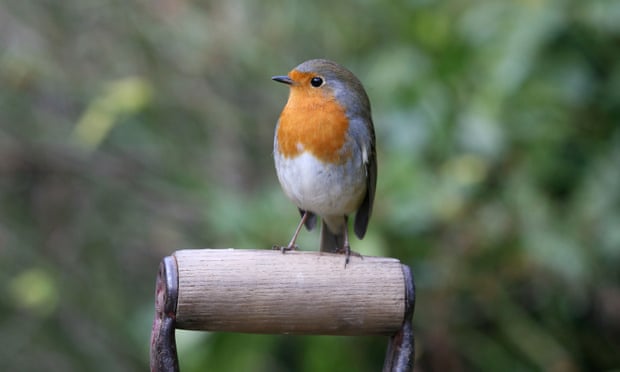
Without the cold I would be oblivious. I wouldn’t know the struggle to find beauty in the dull. On the darkest and dreariest of days I know that if I look for signs of life in the crystals I will find a robin surviving the cold alongside me, protecting its land and bringing colour to the blank space.

Robin and I miss the liveliness of their companions, though they are bound by duty I know they would also knock on the doors of their friends to just triple check they can’t say hello, before they resign to their post to keep watch on the snow.

When spring dawns on the 20th March, Robin and I keep watch as the snow melts away and the grass glistens in the light. They spot their neighbour they haven’t seen December coming over the horizon after their vacation in the tropics.

Soon Robin leaves me elated for some friends. What’s left is my own transformation from bud to blossom.
A letter by Katie Biddle
Dear whoever feels hopeless and naive in these trying times,
Rule of 6, and household requirements are not something we have ever had to consider before March 2020; now it is the light at the end of the very long, windy, confusing tunnel we have all been walking through with a blindfold on. Everything is still ‘up in the air’ but as March 29th fast approaches it feels safe and not disheartening to assume we can go on walks, picnics and bike rides with the group of friends you have only seen through a pixelated zoom call quiz for the past 6 months or even year. Not everyone feels comfortable with the new rules imposed on us and many feel they are still unfair- i would say i am somewhere in the middle. Out of all the lockdowns, this one was particularly hard for me in terms of socialising with friends and even strangers. The cold weather and dark evenings mixed in with uni classes have left me and many others feeling isolated and at times in a dark place with no hope. With vaccines and rapid testing happening in the now, I can’t help but look to these dates Boris has laid out for us and feel hopeful, but very much realistic, to the rest of 2021.
The question mark remains at the end of socialising as nothing is certain and i’ve learnt the hard way taking the maybe as a definite. Maybe I am naive or perhaps just hopeful, hopeful for the future and hopeful for tomorrow. Meeting up with my friends isn’t going to cure my loneliness, but it will make it feel lighter and less overwhelming. I have to ask myself why I feel like this. Why do I think going outside with more than one person will make me feel better? Why am I refusing any more online dates with my friends as we can just see each other next week? Why aren’t I just living in the moment? These are the things I am asking myself, but I have not a single answer for any. I have become stubborn in light of freedom and I think I’m in need of a reality check. I have a privilege to be here when so many have not been so lucky, and I have a privilege to be able to be hopeful.
So again i reiterate the sentiment of what is to return- socialising…?
From someone who is feeling overwhelmed with privilege and a stubborn inability to reality check themselves..
Nia Reynold on exams
Every year around April, the ever daunted exam season arrives. Preparation, revision, assignments deadlines – all clustered together in the span of one month. We write, we stress, we type, we focus, we email, we cry, we submit. Then it’s gone for another year and faithfully returns just when we start to regain composure again.
‘Dear Universe’ – New Poetry by Rebecca Harding
Waiting for the letter that never came.
Wondered if it got lost, ended up on someone else's floor, stamped on, drooled on by a white yapping dog.
Wondered if it got sent to Bermuda, and it was resting on the pink sand beaches, about to be swept away by waves.
Wondered if the postman stole it, sold it on eBay for the price of a breath.
Wondered if you ever wrote it,
Wondered if it was sent...


Waiting for the words of whispers, of dust to be sprinkled on paper.
Just so it can blow away
like dandelion seeds on a summer day.
Wondered if the words were clouded in smoke and now there is nothing left to say.
Wondered if the ink was invisible
and you were smiling from the clouds.
Wondered if you could write it
or if your hand drowned...

Waiting to come back home to you,
but I'm - stuck -  in a black hole, not sure about my address...
maybe you can guess.
Waiting for the letter that never came.
Wondering if I should write one back and just write out your name.
Return of the Drag Scene – New Writing by Stella Nahr
After a long year of lockdowns and closed bars and venues, the drag scene is finally starting to wake up again. Shows and competitions are getting planned and even though most events are about 2 months away, it still feels good to know that there will be something on. In the past months the only possible way to perform was to participate in an online show, either via Zoom, Youtube link or Instagram livestream. Even though performing online can’t compete with being on stage, it was still better than nothing and could at least give you a small glimpse of what it was like to be at an actual drag show.
The covid situation hit the nightlife industry especially hard as clubs have been closed for over a year now, bars are usually one of the last things to reopen and even if they are, you have to sit on a table, not able to move freely and talk to the drag artists, which is half the fun of a show. Many full time drag performers have been struggling over the past year and even though over summer/autumn there was a small gap of certain venues being open (with ridiculous restrictions, nowadays you have to order a pizza to see your favorite drag queen perform) that didn’t make up for the past months without any gigs or income.
The drag scene has been on pause for too long now and artists struggle not only financially. A big part of the nightlife drag scene is the fact that you get the chance to express yourself artistically and connect with other queer people. I miss the sense of community, where everyone lifts each other up and makes them feel welcome. I miss the excitement before going on stage, the thrill of performing and the applause after. I miss seeing everyone’s performances and looks and making new friends every time I go out.
A lot of venues had to close forever during lockdown, but also new queer spaces have opened and new shows and brunches are getting put on. Now’s the time for new ideas to emerge as everything is getting planned and reopened. In the close future you’re hopefully able to attend events without worrying about covid restrictions. The whole scene is more than ready to welcome the new London queer nightlife!
Inua Ellams joined us in a discussion where he talked about his own experiences as a poet; he explained his creative writing journey where he started off with writing narrative poems to dramatic monologues, to radio plays, stage plays and lastly screenplays. He certainly had a lot in store for us…
The story of Inua Ellams began in Nigeria in 1984; he was born in to a middle class family, in which his father worked as a manager of a factory selling ice cream and fizzy drinks. This was pretty awesome for Inua as a child, later on he had discovered a sense of creativity within himself from the age of 4, he wrote stories and loved visual art.
Growing up Inua had a great interest and passion for comic books, he told us that when he came to London his mother gave him a library card, and he would read all the comic books, and then move on to reading many other books throughout the library. He was happy being classed as a “Nerd”.
Next, Inua settled in Dublin, where he attended school as the only dark skinned African throughout the whole school. He never experienced racism but was aware of it happening. Poetry was and still is big aspect of Inua’s life, he usually listened to hip hop music and famous spoken word poets such as ‘Saul Williams’. This was from whom he gathered inspiration from.
Inua moved to London and had a lot of time to spare. He used this time to attend many open mic events. He performed regularly for five to six years, and became a well known spoken word artist. The first poem he performed was “The 14th tale”, in which he was awarded a Fringe First at the Edinburgh International Theatre Festival. From there he worked as an internationally touring poet and then moved on to be a playwright, performer, graphic artist and designer.
At this event Inua explained that “Practice comes from deep personal emotions”. This gave us a sense of understanding about the work he’s produced and where it initially came from. The three key elements which come from his work are Identity, Displacement and Destiny. He talked about “The power of speaking your own truth” in the sense of seeing the world from your point of view and figuring out “how do I make sense of me”. To wrap the event up we discussed the exciting projects and upcoming events that were coming up this year such as, theatrical plays and more episodes of the ‘Swipe Slow’ show. We hope to watch and attend them.
Last Monday morning I walked to the train station with a skip in my step. The sun was shining, my blow dry was looking good, my toddler had recovered from her bout of chicken pox so was back at nursery, and I was back at work. All of these things made me happy.
But the real reason I was so bouncy on a cold Monday morning was that I had a new poem. Over the weekend, in between play dates, hoovering up broken crackers, sponging up potty training accidents, and binge watching Scandi noir on TV, I sat down and began to give shape to an idea – or rather a voice – that had been slowly growing in my mind for the last few weeks.
As part of my bigger interest in pregnancy and birth through the ages, I’m currently gathering together examples of writers, artists and pioneers whose work, creativity, bodies, or even lives were profoundly affected or cut short due to their pregnancy and/or birth. I’ve been wanting to write about Mary Wollstonecraft – the feminist pioneer and author of A Vindication on the Rights of Women (1792) – for a while now, but have struggled to find the right way to explore the circumstances of her death, as well as the relationship that this inevitably has with her feminism, her writing, and her desire to minimise the power of the body. This painful and ‘gendered death’, as Vivien Jones puts it, is all the more painful because ‘it seems to defy so cruelly some of the most fundamental tenets of Wollstonecraft’s own feminism.’* And that tension, between the physical realities of her death of postpartum blood poisoning, and her wish to be seen as so much more than simply a female body, has made it hard to find the right words.
Mary Wollstonecraft
So when the first draft did come, it felt like a victory. More than that though, I experienced that particular electric euphoria that can come with a first draft of a poem. Fittingly, it’s something akin to the euphoria of holding a newborn baby. You feel energised, alive, and amazed at what you’ve managed to create. With a newborn poem, you’re sure that this early draft is the best thing you’ve ever done. It’s perfect already, no more edits needed. This, you are sure, is going to be the making of you.
Luckily, I’ve been writing for long enough now to recognise the symptoms of this particular delusion. Painful workshops, cutting editorial comments, and the cold light of many new days have hardened me to the allure of a newborn poem. I know that it’s not perfect. Far from it. I may not be able to see its blemishes now, but I know that in a couple of days I’ll be able to view it with a more objective gaze. I’m almost scared of what I’ll find.
Time and experience have taught me how fundamentally important editing is. It has also shown me the difference a couple of days (weeks/months/years) can make to any reading of your own work. As writers, we need both proximity and distance to our material in order to shape it. We also need to continue to reflect on our creative practice, and find new ways to step outside of the sometimes claustrophobic relationship between ourselves and the page or word doc. We also need to read the work of our contemporaries to recognise what a finished poem looks like, and to put us in our place when it comes to recognising our own strengths and shortcomings.
That’s why practices like journaling are so important. They allow this space, and encourage a more holistic approach to creativity. Since Monday I’ve been working on my own version of a journal: I’ve been creating a zine. A zine – a DIY magazine or pamphlet, usually put together by one person or a small group, and comprising original and/or appropriated texts and images – offers a great opportunity for small presses and self-publishing. They are relatively easy to make and reproduce (just make sure you’re armed with good stationary and a decent printer or photocopier) and feel fresh, raw, and original.
instructions via researchgate.net
This is the way I put together my zines – anything more complicated and I’m lost! However, I don’t make them to sell or give away. As well as providing a showcase for new and unpublished work, zines, like journals and mood boards, are a great way to visualize and think around drafts and work-in-progress.
A few pages from the Wollstonecraft poem-in-progress zine
It’s Friday now, and the euphoria of the first draft has worn off. But I knowthat with any piece of writing – creative or academic, there are different stages to work through, different challenges and levels of energy, different moods and kinds of relationship between you and your creation. And continually reflecting on these stages, whether through a journal, a zine an essay, or any other way you choose, allows you to become more self-aware as a writer, and learn about how best to move from the newborn poem stage to something more lasting and mature.
References
*Vivien Jones, ‘The death of Mary Wollstonecraft’, British journal for eighteenth-century studies 20 (1997), p. 187.




 WRITE WESTMINSTER BLOG