The Mysterious Cucumber

By Aidan Wheatley

When it came to facing the unknown it is either met with fear or hate but the unknown, I met was neither. It was another arctic day in the big city, which is often the case when nearing the beginning of winter. I was moving my way through the sea of people that always flood the noisy streets. It was the middle of the day. All the people kept the pigeons at bay. I have had a few close encounters with pigeons flying too low and it is not something I wish to repeat. The University at which I study was my destination. Once I had arrived, I decided to check the time and I saw I still had an hour until the seminar. I have always liked to arrive early as I believe it is better to be early than late. This is because being late means missing out.                 

I had begun to make my way up the many empty stairs. At that time of the day not many other students or tutors walk up or down, at least not in large groups. Along the way I was thinking to myself, which is something I like to do even when waiting outside the classroom. I have often enjoyed thinking to myself as it allowed me to run wild with my imagination. But before I even made it halfway to the floor, where my seminar had taken place that day, I spotted the unknown. I felt neither fear nor hate when I had stopped and looked at the mysterious thing. The unusual thing that I saw was a small piece of cucumber. It wasn’t a particularly big piece; it was the sort of piece you would find in a sandwich or a burger.                                                                                                                                      

I have never liked the taste of cucumbers but something about that mysterious piece was very mesmerising. The green imperfect circle leaned against the front of the stair above the stair it sat on. It looked like it had been placed there by someone, but I didn’t know who as I saw no one else on the stairs. To me it had looked like a prisoner trying to cling to the wall to avoid being spotted by the guards above. I will never know how the piece of cucumber had got there or even why it was placed there. Even at the time I did not truly know for sure whether the piece was actually a cucumber but nonetheless it was very mysterious. If I were a believer of God or some other higher power, I would have thought it was some godly act. Perhaps it was a message but what the message was I will most likely never know. Maybe I was just over thinking it and maybe it was just a piece of food someone had accidentally dropped.

An Ode to Mums

By Isabel Mukasa

There should be a song for the woman who works day and night meeting the needs of those she loves,
A song for the woman who makes sure her children are okay.
There should be a song for the woman trying to complete every task given to her,
A song for the woman proud of her heritage and the upbringing of her children.
There should be a song for the woman who cooks to keep her children fed,
There should be a song for my mother.

Ode to a Conversation Stuck in Your Throat – by Georgia Alard Christoforou

Listen as you read: Del Water Gap – Ode to a Conversation Stuck in Your Throat (Official Video) 

We’ve known each other for so long now,

you’re tucked away in my ears. When push

comes to shove, and emotions run high, I press 

play.

Ode to a Conversation Stuck in Your Throat,

it’s a struggle to muzzle the pain

over and over.

You don’t heal anymore, simply break me apart.

You called to me from the bonfire

as dawn broke free of the tepid night,

through the blue-tooth speaker of the

guy my best friend had called a liar.

Past the thicket of green I face you,

finally.

“I don’t want anybody else touching you like I do”

how could your words pierce so deep into my

Chest, filling my cavity with smoke

I can’t describe the feeling. Grey.

It’s profound to hear words that numb every

nerve yet leave me yearning for it again,

like a bad drug.

Breathing becomes heavier, shorter,

emotions, motion, rushes to my head

some strange euphoria it gives.

I ask of you, heal my fractured heart.

Cement the cracks with your understanding,

you understand how I feel, do you?

All the lost loves chase me 

down the streets of London, haunting

and lingering. But you, the song, can make 

them disperse like vapour,

at least you used to.

‘And it may not mean much to you’

It never seems to mean anything,

‘But your plates are in his sink’

Are we moving on so quickly now?

‘And your sweater’s on his bed’

Just as they left theirs on mine,

‘Won’t you text me when you’re home?’

Have I crossed their mind since the silence?

Please ‘spare me all the rest’.

It’s strange how times change.

I once needed them, now, I once needed

you. You come with a warning before

I press play,

tears will fall.

The irony is that I wanted your help,

you helped

and today I find myself pulling away

From your grasp.

A song is all you are

yet you have the power to build me up

and break me down.

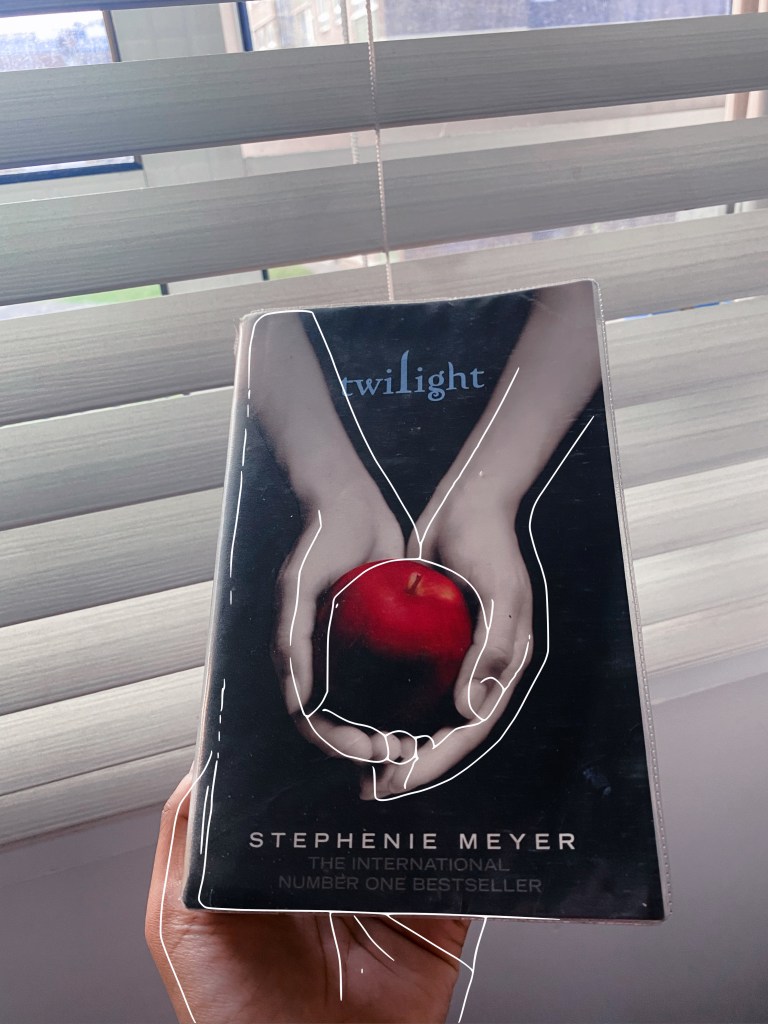
Why I Will Always Be A Fan Of Twilight

By Sajida Aktar

I remember binge reading all four books within a month and a half. I couldn’t wait to jump from one ending to the beginning of another. To treat myself, I’d watch the movie right after finishing a book to further expand my growing obsession. I couldn’t tell you what my 12-year-old self loved so much about it. I re-read the first book again 10 years later and it took me longer than a month to finish because by then I had developed in all aspects of my life. I pondered, what the hell is this shit? Why did I love it so much? These characters are awful!

The books introduced me to a world of Young Adult Fiction. The selection at the time was modestly small. Publishers were still deciding where this new genre belonged because it was nowhere near Child Fiction nor was it desirable enough for Adult Fiction. Twilight had high school romance, vampire sex, hot werewolves, and a love triangle. It had teenage angst, a feeling of comradeship among mythical creatures and a forbidden love that was in all ways unrealistic but exciting to read about.

I still go back and watch the movies religiously every year. It has become a sort of comfort for me, though I am well aware that the films are in no way Oscar worthy. They bring me back to a place of happiness in a world that didn’t exist but was in all ways a home in my imagination from the realities of boring mundane life. I watch the films because I feel like I am a 12-year-old girl again, waiting for break time to come around so I can find the other girls who read the book. We’d discuss for weeks the new movie that was coming out and our expectations leading up to it. Tearing each other apart based on the teams we chose (I was unconditionally and irrevocably in love with #TeamEdward). We knew nothing of boys or men because they were nothing compared to the fictional ones we read about. Those who could afford a copy of the book or DVD would be kind enough to share it around so the others could join in. There was no gatekeeping, we were in all ways unapologetically outspoken about sharing this world with anyone who was interested. Our standards, our education, our look into the world of an almost-grown-up was through this book.

The movies have created a safe place to my younger self and I will forever be tied to the franchise because of it. I come back to it after a bad day or a cold evening in Winter, where the best time is spent wrapped in a blanket and having a mug of hot chocolate as my company. I come back to it every year because it reminds me to nurture that little girl inside of me that I sometimes forget about every now and then.

Daisy

By Carina Carvalho-O’Dell

Opening the door forcefully, she checks in, scribbling her signature on papers before grabbing them and running. Sprinting down the discouraging hallways, passing patients with worse futures than hers. Each one held the same disheartening expression with a tiny amount of hope that they could escape from this hellhole.

Daisy pushes herself further down the building even though her legs plead for rest. The bright blue walls tried to scare peoples fear away but were peeling down as if it was sobbing to break out. 

Stopping right outside the door, her trembling hand latched onto the handle. The icy metal sank into her warm skin. Taking a deep breath letting all the chemicals and antibacterial block her nose as if reminding her where she was. Gathering the courage, Daisy snapped the handle and pushed her way in. Clover sat comfortably in bed with her body under the covers. Her eyes landed on Daisy, and Clover’s face lit up like an on switch. 

“Hey, big sis”, her cheery voice filled the lifeless room. 

“I’m only five seconds older,” Daisy rolled her eyes as she closed the door. The walls were painted in a nauseating yellow as if reflecting her sister’s state. Clover’s bed was leaned against one of the walls, a small table beside it and a long window behind.  An empty vase sat there with nothing but water and a few wittering petals from the last bouquet, counting down the seconds till her time was up.

“I’ll be leaving you soon” Clover’s voice switched from joyful to delicate as if she said the wrong word; Daisy would break like a bubble. Squeezing Clover’s hand with a dejected smile on her face, they had been together since they were in their mother’s womb.

“Everything’s gonna be fine; your big sister is here” Daisy held her sister close, not wanting to let Clover go. Daisy attempted to hold onto her emotions, but her grip was loosened, and the tears were clouding her eyes. 

“I don’t want to say goodbye”, she cried out, her life shattering around her. Her twin sister was dying, and there was nothing Daisy could do.

“This isn’t goodbye. This is simply, see you later.”

Interview with David Nath: The Art of Storytelling, Fact versus Fiction and Industry Advice by JOSETTE PUNTER-THOMAS

Zoom has proven to be an effective way to connect and collaborate with others as the last couple of years have shown. Luckily for us, it gave us a chance to have a technological ‘sit down’ with British producer and director – David Nath. Greeting turned off cameras and muted microphones, the seasoned professional that he is, he still exuded the same charisma that he would have if talking directly to us in person.

There are many routes a person could take to get their start in media. David, despite getting a degree in Politics ventured into journalism by working on an evening newspaper. Not to say print is dead but it is much more of a rarity to see a physical copy of a newspaper these days, especially when we have access to a plethora of papers from one tap on our screens.

For three to four years, he primarily reported on crime which can be perceived to have had an influence on the dramas he has gone on to produce and direct. London Weekend Television – a regional broadcast – is where he caught his break working in documentary, taking him from researcher to producer and then eventually directing freelance. David gave an example of what his time looked like during this period as he was working with ‘real people, real stories’. For two to three years, he followed a murder squad, starting with the discovery of the body to the prosecution of the perpetrator.

David notes the differences between his work then and now describing them as a very ‘different form of storytelling’ after his debut in drama in 2014/15. Transitioning from documentary to drama is not without it challenges. He was apprehensive at first about stepping into the ‘mythical’ world of drama after dealing with the cold hard factual reality of documentary.

With documentary it is observational and there is little control over the narrative as the telling of events cannot be predicted since you’re dealing with real people who divulge the information and therefore real emotions. Which is a very different story compared to drama wherein you start with a ‘tabula rasa,’ a blank slate, over which you have complete control over the direction of the narrative. However, such control comes with great responsibility to ‘get it right’ Nath warns as human curiosity has to be satisfied. That’s what drives the narrative engine, people wanting to see themselves reflected in the storylines and characterisations on television.

Garnering experience in every role imaginable, David shared some insights on the industry and creative processes he undertakes. Much like writer’s block, moments of crisis are bound to happen ­­­– whilst it is important to follow your instincts, feedback is conducive to the formulation of an idea, especially in a collaborative setting. It is important to not be defensive and find a way where all parties can be agreeable. The first step on the way to collaboration? Share your work. It is normal to feel scared about putting your work out there, but it remains a fact that personal work will be judged by other people, that it’s simply the nature of this industry. It is an anomaly to perfect something the first go at it, that is where feedback comes in handy. Continuing to offer practical advice for budding scriptwriters that I’m sure applies to novelists – you too have to write in order to be a writer. Procrastination is the enemy of progress, but we all fall victim to it from time to time.

Although ‘writers’ rooms’ are more of a popular notion in the US, they are beginning to be introduced into the UK where a head writer will have hand-picked others to collaborate or solely write episodes of a series. In order to get into that room, you have to get your work out there. He was honest and mentioned that the informality of this industry did mean luck plays a part in every person’s success story, but you have to take chances, even if that looks like DM-ing a respective writer asking to share your work with them. What’s the worst that can happen? You get told no. Then you go again, on to the next.

The interview was concluded after graciously fielding our questions and extending an olive branch as much as to view our work if we would ever want to share. Though he spoke from the mind frame of a director/producer, his illuminating advice was definitely applicable to this wannabe writer and hopefully someone out there too.

My Last Goodbye To You

Maryam Khan

Everything was an adventure with you,

From your spontaneous outings that always ended in laughs and fond memories,

To the random lie-ins we’d have when you were having a low day.  

But that all went away when you did.

There were no more random walks in the park,

No more jumping on trains and seeing where they took us,

No more looking at strangers and thinking up stories about their lives.

All that was taken away when you were.

So now as I sit here by your grave,

I think about all we did together and remember how you used to say,

“In the end, we only regret the chances we didn’t take”.

So as my last goodbye to you, I promise to take all the chances I’m given.

ABBA Voyage: A Review

Review by Bex Thackery

You can now go to space. Or back in time to 1977. You can stand metres away from the versions of people and a true phenomenon that existed 45 years ago. 

Although it’s 2022 and it feels as though almost anything is readily available at our fingertips, all of these things sound too beyond the time of today. ABBA Voyage, the innovative virtual concert that began in May 2022, in London at the ABBA Arena has been described by those who have not attended as being pointless and a waste of money when you’re not “seeing the real deal.” I feel confident when I say I believe that anyone who has attended would reply “it’s indescribable, a form of true magic.” 

The concert journeys through the Swedish supergroup’s popular hits, namely Knowing Me, Knowing You, Mamma Mia, only two of their new songs, with the curtains closing to The Winner Takes It All as the audience comes together in emotion and unison. Between the nostalgia of their greatest songs, the avatars of the band go through numerous costume changes that have been designed by the likes of Michael Schmidt (who once dressed Debby Harry in razor blades), Dolce Gabbana and more, headed up by Swedish costume designer Bea Akerland.

They also dance, they embrace one another, and they talk to the audience in London. They appear as if they are on stage, films are shown that nod to the music videos from their heyday, and strangely, ABBA-turn-anime clips are displayed to the audience. But, who am I – or who is anyone – to fault ABBA?

As my friend and I propped ourselves up at the bar with only moments to spare before the show began, unlike any other gig, we were surrounded by children from the ages of three, teenagers, and people who would have been in their forties when the group won the Eurovision song contest with Waterloo in 1974. Wearing a subtle tribute to the band – a 70s-esque brown corduroy waistcoat and black denim flares – I glanced around the room of anticipating guests. Middle-aged men in gold and silver bomber jackets, novelty glasses that read “ABBA” across the brow of younger ones, and groups of women in metallic kickflares and the renowned “Agnetha hats” in blue sequins.

Waiting to be served, my friend and I practised the routine to Dancing Queen whilst singing/excitedly giggling to the tune. A woman behind me, I’d say in her 60s, tapped me on the shoulder and said “I’d pay to see you perform” and we laughed together when she said in disbelief that I wouldn’t have been born during the time of the band’s fame.

All of this is when I realised that there really aren’t many moments like this in life. Where a group of people, strangers, of all walks of life, generations and interests can be united by something that is personable to all, even when say half of them weren’t even alive when the idea was born. And that statement is testament to the entirety of the concert and experience – ABBA have not only proved that they are timeless – and now immortal – but that their significant influence on European pop music is something that will be written in history. All of it was and still continues to be a true metaphor for what music in general is to most of us – something that isn’t physically there, that isn’t tangible, and yet we feel personally and uniquely connected to in so many indescribable ways. And maybe our surface-level thoughts, our opinions of the band, who is our favourite or which song is the best is not something we can all agree on, but the feelings of euphoria and nostalgia is something that can be shared through many, for a long period of time. Maybe, forever. 

Picture credit for second photo to Huzzar Huzzar Vintage

Review on Emily

By Abbigail Mulleavey

The newly released movie Emily directed by Frances O’Conner hit theatre’s on October 14th and has received a wide range of reviews since the premiere. Going into the movie, my expectations were to learn about her relationships with her family, see how Emily began to write, the inspirations behind Wuthering Heights. It is clear from the first scene that Emily is an outsider within her own family based on the darker shades she is dressed in compared to her sisters. Often, we see her in shades of blue and grey while Charlotte and Anne are in light pink and white. Despite Anne being the youngest, Emily is labelled as the least mature of the family due to lack of goals and crippling shyness that limits her in friendships.

She relies on her siblings for companionship which leads her to grow a close bond with her brother. The building of the relationship between Emily and Branwell was enticing and heart-warming, despite Branwell inadvertently getting Emily into trouble. Branwell leads Emily to explore opium, drink, and trespass on a neighbor’s property; however, he also encourages her to write poems, find confidence in her unique personality, and look for relationships outside of her family. Their complex relationship brought both dramatic and humorous scenes to the film and encouraged the character growth of Emily.

Without spoiling the plot, Emily struggles to deal with her tender emotions that continue to arise throughout the movie, and the death of a close friend encourages her to put pen to paper and start Wuthering Heights. Overall, I did enjoy watching the dramatic take on Emily’s life over a documentary but do feel that Frances O’Conner could have expanded on a few areas. I would have liked to see the three Brontë sisters work on their collective book, Poems by Currer, Ellis, and Acton Bell, and wished the haunting mood carried on through more scenes. With all this said, I give Emily 3.5/5 stars and would recommend it to those who enjoy exploring the life behind famous authors, like Emily Brontë herself.

Trailer for Emily here: